

December in Toronto is cold. Not “wear an extra layer” cold — genuinely, properly, face-stinging cold. The kind of cold that shapes decisions. And yet, every year, some of the most spectacular Christmas parties in this city happen outside. Heated structures on rooftops. Igloo villages in hotel courtyards. Fire-lit celebrations in the Distillery District. Outdoor events that work precisely because someone thought carefully about what entertainment belongs there, and what absolutely doesn’t.
That’s the conversation this post is for. Not “indoor is better” or “outdoor is more memorable” — both can be extraordinary. The question is which acts work in which setting, what you’re giving up when you make the wrong call, and how to build an entertainment programme that fits the space you’re actually working with.
The Core Difference: What a Venue Controls
It sounds obvious until you’re on a site visit in November trying to decide: an indoor venue controls the environment. The temperature, the lighting, the ceiling height, the acoustic quality. An outdoor venue controls none of those things — it offers atmosphere, scale, and a visual backdrop that no ballroom can replicate, but it trades away the conditions that certain acts absolutely depend on.
This matters for entertainment in specific, concrete ways. An aerialist on silk at five metres in a dimly lit ballroom is extraordinary. An aerialist outdoors in December wind, without a rigging structure, in costume not designed for -4°C, is a different conversation entirely. Meanwhile, a fire performer outdoors on a cold December night? The cold makes it better. The darkness makes it better. The contrast of warmth against the winter air makes the whole experience feel like something that couldn’t happen anywhere else.
So the first question for any entertainment decision isn’t “which act do I want?” It’s “what does my venue actually allow?”
What Works Beautifully Indoors (and Why It Stays There)
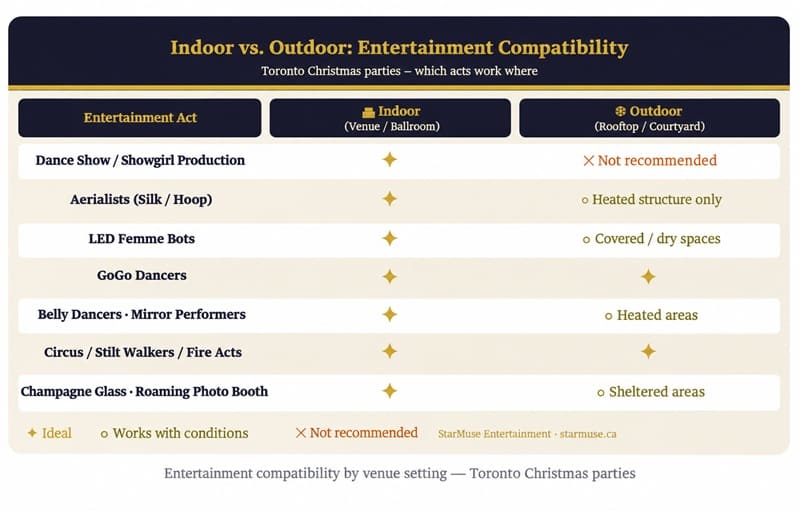
The Showgirl Production
A Las Vegas showgirl production — full choreography, feathered costumes, sequins catching the stage lighting — is built for the indoors. Not because it couldn’t physically happen outside, but because everything that makes it extraordinary depends on a controlled environment. The lighting. The staging. The acoustic quality that lets the music carry properly. The warmth that lets performers sustain the costume and choreography at full intensity.
Put that show inside a venue like Rebel or a hotel ballroom draped for December, and it’s the defining moment of the evening. The same show on a rooftop in -4°C with wind affecting the sound system is a different thing entirely — and not in a good way. Some acts need the room to work. This is one of them.
Aerial Performances
An aerialist on silk or hoop at the ceiling of a dimly lit venue is one of those genuinely held-breath moments — the room goes quiet in a way that nothing else produces. It needs confirmed ceiling height (around five to six metres minimum), confirmed rigging points, and an environment where the performer can work safely and at full capability.
Outdoors, aerial is not impossible — with the right temporary rigging structure and a genuinely protected, heated space — but it moves from “spectacle” into “logistical undertaking.” If your outdoor venue is a proper heated tent with the ceiling height and rigging capacity, the conversation is worth having. If it’s an open courtyard or a rooftop with a temporary shelter, the answer is probably to save aerial for a different event.
LED Femme Bot Performers
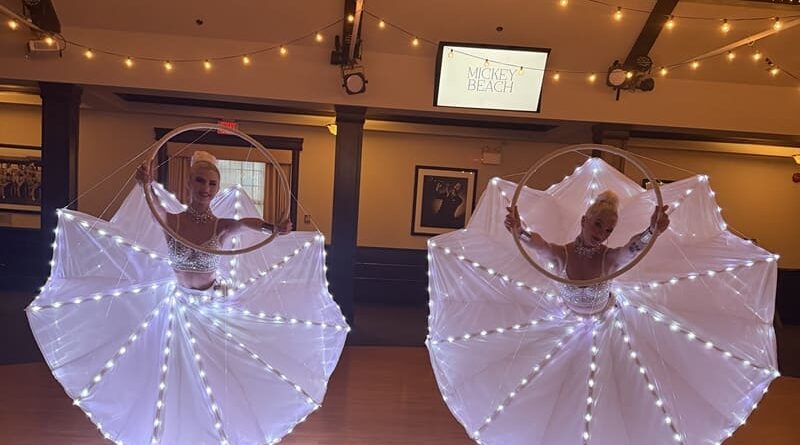
The programmable LED suits that make LED Femme Bot performances so visually extraordinary are electronics in costumes. Electronics and Toronto December weather — rain, snow, sleet, the specific damp cold that settles over the city in the second half of the month — are not friends. The performers need protection, and the full visual impact of the suits depends on the controlled lighting of an indoor venue. The reveal moment in a darkened ballroom, where the suits pulse to life and the whole room responds, is specifically an indoor experience.
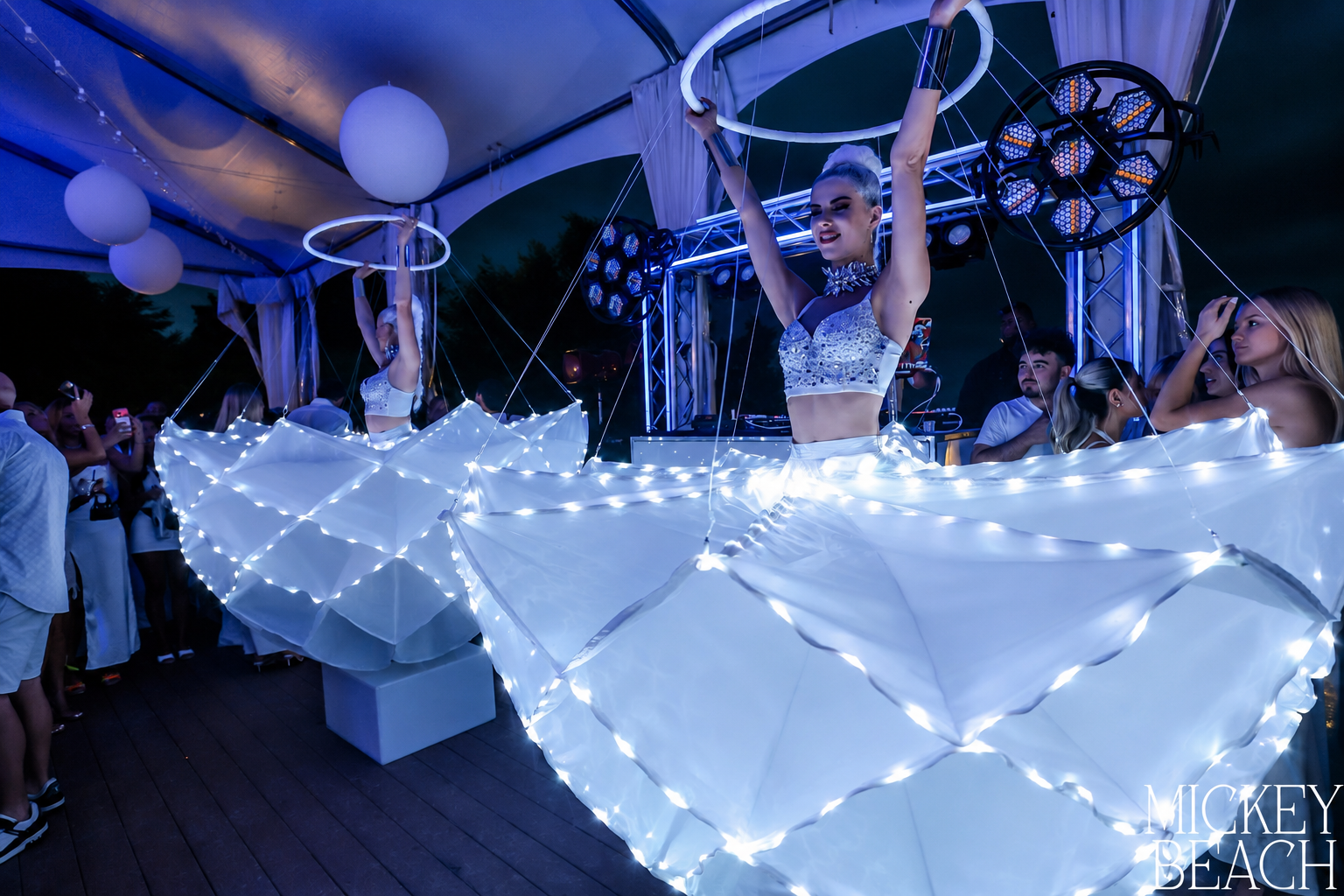 In a properly protected, dry outdoor space — a covered rooftop, a heated pavilion with controlled lighting — LED acts can work. In an open outdoor environment, they’re not the right call.
What Works Outside (and Why It’s Actually Better There)
Circus Acts, Stilt Walkers, and Fire Performers
Here’s the reversal: circus performers and fire acts are genuinely better outdoors in December than they are inside. The cold night air makes fire performance more visceral. The scale of an outdoor space gives stilt walkers the room to actually move — to greet guests arriving from the street, to roam a courtyard, to appear and disappear in ways that a function room simply doesn’t allow.
A fire performer at the entrance to a Distillery District venue on a cold December night is not just entertainment — it’s a landmark. Guests who would have otherwise walked past a door now stop, watch, photograph, feel the warmth. The winter setting doesn’t undercut the act. It frames it perfectly.
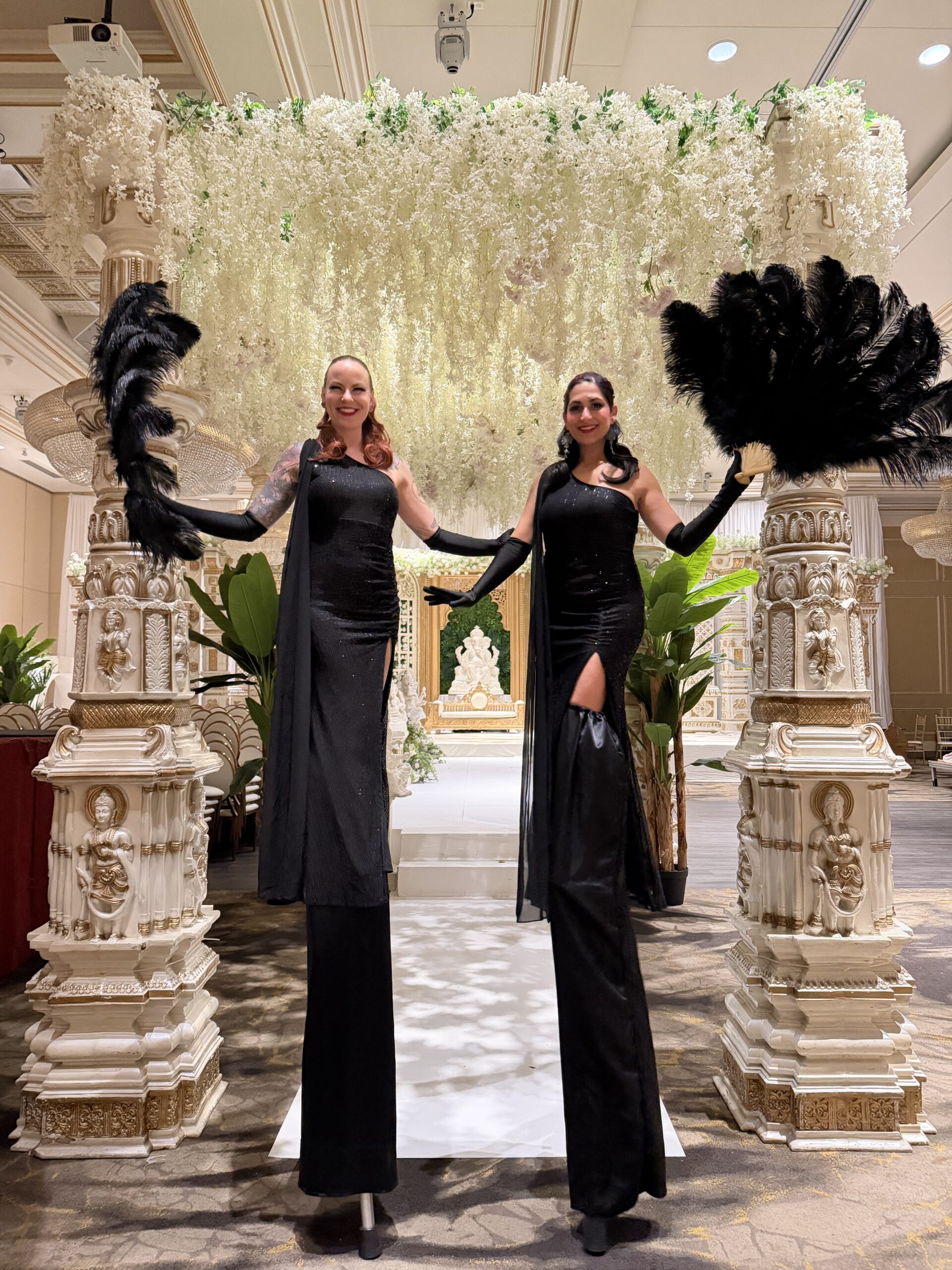
Stilt walkers are similarly transformed outdoors. Inside a ballroom, a stilt walker is impressive. Outside, greeting guests as they arrive, visible from half a block away, interacting with people before they’ve even entered the event space — that’s a different level of impact entirely. The outdoor setting gives the act its proper scale.
GoGo Dancers
GoGo dancers are the most versatile act on the roster across both settings. For outdoor events — rooftop parties with heated areas, festival-style Christmas markets, outdoor winter celebrations — they bring the same energy-sustaining function they provide indoors: sets timed at the natural dip points in the evening, pulling the crowd back up and keeping the floor alive. Warm layered costuming can be styled for outdoor winter events without compromising the performance.
Roaming Photo Booth
A roaming photo booth attendant is naturally suited to the fluid movement of an outdoor event. Guests are less stationary outdoors — they’re moving between heated areas, gathering around fire features, exploring the venue — and a roaming attendant follows that movement rather than waiting for people to come to a fixed point. The images that come back from an outdoor December party, with breath visible in the cold air and fire in the background, are often more striking than anything that happens in a ballroom.
The Split-Venue Event: Outdoors First, Indoors for the Show
The format that consistently produces the best Christmas parties in Toronto isn’t purely indoor or purely outdoor — it’s both, in sequence. And it’s more achievable than most planners assume.
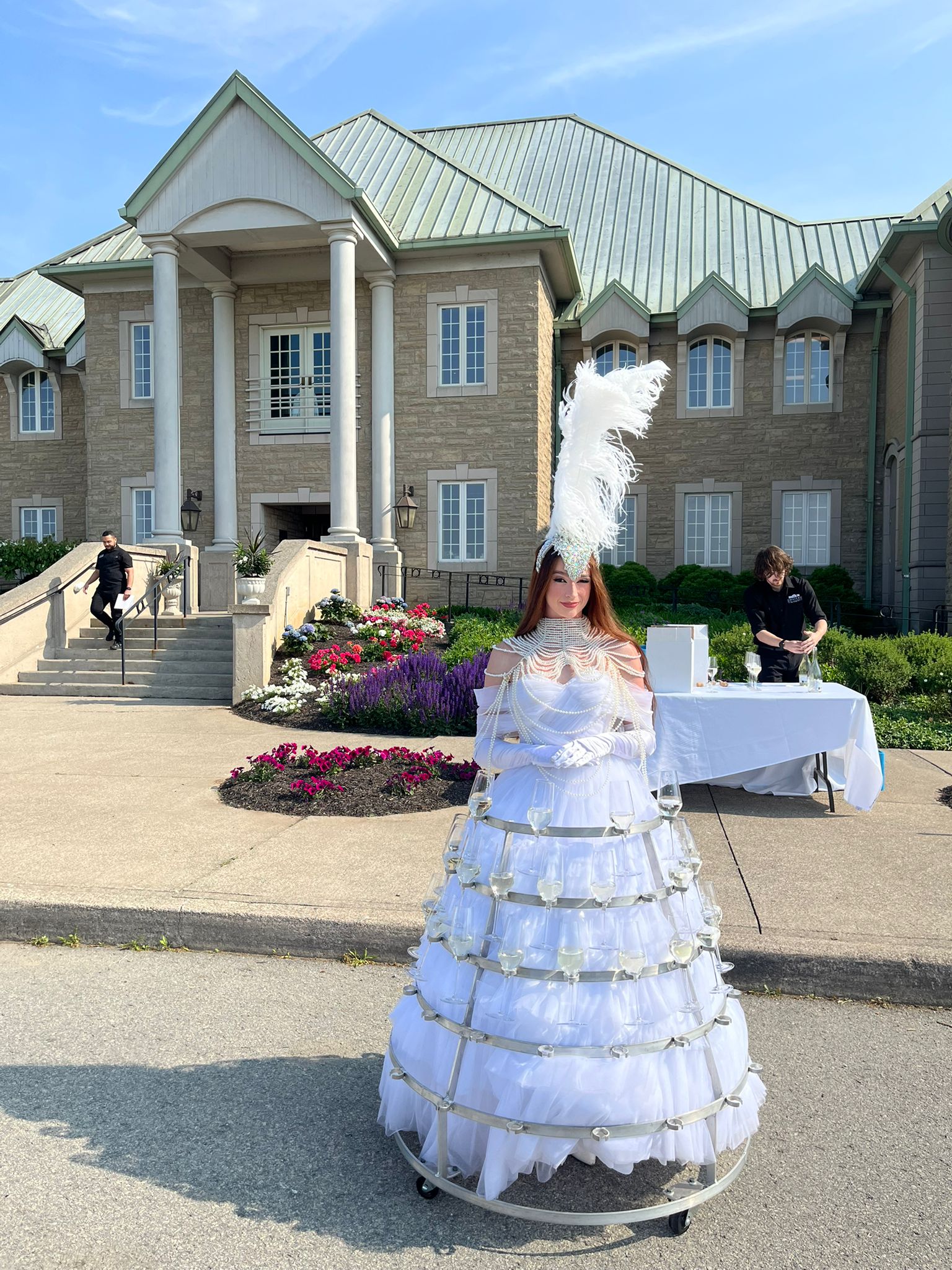
The structure works like this: guests arrive into an outdoor space for cocktail hour — a heated rooftop, a courtyard with fire features, an igloo lounge — where circus performers, stilt walkers, or a roaming champagne service create immediate atmosphere. The cold works in your favour here: guests are animated, moving, talking. The environment is naturally energising.
Then, after forty-five minutes to an hour, everyone moves inside for dinner and the headline entertainment — the showgirl production, the aerial act, the LED reveal. The transition from cold outdoor atmosphere to warm, theatrical indoor setting creates a genuine sense of arrival. Guests who were already animated from the outdoor section walk into a room that feels like the main event, and the contrast between the two settings makes both more memorable.
The event management team at StarMuse plans entertainment across both spaces as a single coordinated programme — the outdoor performers briefed for the conditions, the indoor acts staged for maximum impact on arrival, the transitions timed so the energy doesn’t drop between spaces.
Practical Considerations Nobody Puts in the Brochure
A few things that come up in every outdoor December event conversation and are worth knowing before you’re in the middle of it:
Performer briefing: Any performer working outdoors in December needs to be briefed on the conditions well in advance — not on the day. Costume layers, warm-up space, timing adjustments, the specific surfaces they’ll be working on. This isn’t a last-minute conversation.
Electronics and cold: Battery life drops in cold. Wireless audio equipment behaves differently at -5°C than it does at room temperature. Lighting rigs that work beautifully indoors need to be checked against outdoor conditions. None of this is insurmountable, but it all needs to be on the production checklist.
Guest experience vs. performer experience: These are related but different problems. A heated outdoor area that’s comfortable for guests in coats may not be comfortable for a performer in costume after thirty minutes. The entertainment programme needs to account for performer rotation, warm-up time between sets, and the total duration of outdoor exposure for each act.
Weather contingency: Toronto in December can be -2°C and clear or -12°C with freezing rain. The entertainment plan for an outdoor event needs a contingency version that works in genuinely difficult conditions. That means having an indoor fallback for the acts that can’t adapt, and knowing in advance which acts can run in any weather and which ones can’t.
Timing is tighter outdoors: An indoor event has natural tolerance for a programme that runs ten minutes late — guests are comfortable, the bar is open, the room holds. Outdoors in December, ten minutes late is ten more minutes in the cold. Outdoor entertainment programmes need to run tight.
Specific Toronto Venue Contexts
The outdoor Christmas event scene in Toronto has matured significantly over the last several years, and certain venues and formats have established track records worth knowing:
Distillery District: The Toronto Christmas Market runs through the full month, and private events in the district’s heritage buildings and courtyard spaces have become some of the most sought-after December bookings in the city. The cobblestone outdoor spaces suit roaming circus and fire acts perfectly; the indoor event spaces in the restored industrial buildings handle aerial and showgirl productions with the ceiling height and aesthetic they need.
Rooftop venues with heated structures: A number of Toronto rooftops now install heated pavilions and igloos for the winter season. These hybrid spaces — technically outdoor, but protected and temperature-controlled — open up options that a fully exposed outdoor venue can’t accommodate. LED acts, belly dancers, and mirror performers can all work in a properly heated rooftop structure.
Evergreen Brick Works: The Pavilion’s industrial interior handles large-scale productions; the outdoor ravine setting, when used for pre-event reception, creates a genuinely unusual December atmosphere that benefits from fire and roaming entertainment.
Hotel courtyards and private estates: Increasingly, Toronto hotels with courtyard spaces are offering heated outdoor reception formats for December corporate events. These spaces vary widely in what they can accommodate, and the entertainment conversation starts with a site visit.
Building the Right Programme for Each Setting
The honest summary of this whole conversation is: the venue shapes the entertainment, not the other way around. The best Christmas party entertainment programme isn’t the most ambitious one — it’s the one that fits the space it’s working with and plays to that space’s specific strengths.
For a purely indoor event, the full roster is available. Dance show, aerialists, LED performers, belly dancers, mirror acts, GoGo dancers, champagne glass, roaming photo booth — build the programme around your guest count, your theme, and your timing. The only limits are ceiling height for aerial and your imagination for everything else.
For a purely outdoor event, build around the acts that the cold genuinely benefits: circus performers, stilt walkers, fire acts, GoGo dancers, and roaming entertainment that moves through the crowd. Use the outdoor setting as atmosphere rather than fighting against it.
For a split-venue event — the format that consistently produces the most memorable Toronto Christmas parties — plan the two spaces as a sequence. Outdoor arrivals with roaming and fire entertainment, indoor headline acts and dance floor. The transition between the two is part of the experience, not a logistical inconvenience.
StarMuse Entertainment has been building Christmas party programmes across Toronto’s indoor and outdoor venues since 2015. If you’re in the planning stage — whether you have a venue confirmed or are still deciding between formats — get in touch. The earlier the conversation starts, the better the programme gets. December books fast, and the acts that make the difference book fastest of all.
Frequently Asked Questions
Can you have outdoor Christmas party entertainment in Toronto in December?
Yes, with the right planning. Toronto’s December temperatures average -1°C to -6°C, but circus acts, stilt walkers, fire performers, GoGo dancers, and roaming entertainers are all well-suited to outdoor winter events. Heated structures expand your options considerably. What doesn’t work well outdoors: aerial acts without proper rigging infrastructure, LED electronics in wet or exposed conditions, and showgirl productions that depend on controlled staging and lighting.
What entertainment works best for an indoor Christmas party in Toronto?
Indoor venues can accommodate the full range: aerial acts, LED Femme Bot performances, showgirl productions, belly dancers, mirror performers, the champagne glass centrepiece, GoGo dancers, body painting, and a roaming photo booth. The specific combination depends on ceiling height, floor plan, and the event’s theme. Talk to StarMuse about what works for your specific venue.
What outdoor Christmas party venues are popular in Toronto?
The Distillery District, rooftop venues with heated winter structures, Evergreen Brick Works, and hotel courtyards with temporary pavilions are among the most popular outdoor Christmas event spaces in Toronto. Each has different entertainment capabilities — a site visit is the starting point for any serious entertainment planning.
Does weather affect Christmas party entertainment in Toronto?
Yes, specifically for outdoor events. Cold affects performer stamina, costume practicality, electronic equipment performance, and guest comfort. The entertainment plan for any outdoor December event needs a weather contingency, clear performer briefing on conditions, and acts selected for their adaptability to cold. Indoor events are insulated from these variables entirely.
Can I book the same entertainment for indoor and outdoor sections of one Christmas party?
Yes. Many of the best Toronto Christmas parties use a split format — outdoor cocktail hour with roaming and fire entertainment, indoor dinner and headline show. StarMuse plans the full programme across both spaces, assigning the right acts to each section and timing the transitions so the energy carries through the whole evening.








Comments (2)
[…] Indoor vs Outdoor Christmas Party Entertainment Toronto […]
[…] Indoor vs Outdoor Christmas Party Entertainment Toronto […]