
Most guests at a corporate gala, wedding reception, or private celebration see about fifteen minutes of a dance performance. What they do not see is the eight to twelve weeks that came before it. The costume fittings, the choreography sessions, the venue walkthroughs, the pre-show logistics — none of that is visible from the audience. But all of it is what makes the fifteen minutes look effortless.
At StarMuse Entertainment, we have been delivering professional dance performances for events across Toronto and the GTA since 2015. From gogo dancer residencies at Rebel and Cabana Pool Bar to fully choreographed showgirl productions at corporate galas, every performance follows a process that most clients never see. This post pulls back the curtain on what that process actually looks like — from the moment a booking is confirmed to the moment the performers take the floor.
Stage One: The Brief and the Vision
Every StarMuse performance begins not with a rehearsal, but with a conversation. When a client books entertainment for a Toronto event — whether that is a year-end gala for four hundred people at a downtown venue or an intimate milestone birthday at a private estate in Kleinburg — the first task is understanding exactly what that event is supposed to feel like.
This is more specific than it sounds. “High-energy” and “elegant” are not briefs. A brief tells us the event type, the guest profile, the venue layout, the timeline, the theme, and the moment the performance is supposed to create. Is the goal to signal the start of the dance floor? To deliver a jaw-dropping spectacle after dinner? To warm up a room of corporate guests who have been sitting through a three-hour programme? Each of these requires a different format, different music, and different performer energy.
For LED Femme Bot bookings at product launches, the brief also includes brand assets — the company logo, colour palette, and any specific animated messaging that needs to be programmed into the costume display panels before the event. For belly dance bookings at multicultural weddings, the brief might specify particular cultural touchstones or family traditions the performance should acknowledge. For aerial performances, the brief always includes a venue ceiling height check — because no amount of beautiful choreography recovers from discovering on the day that the rigging points are three metres too low.
This intake stage can take anywhere from a single phone call to several detailed emails. For custom-choreographed productions, it can involve multiple creative conversations over several weeks. The brief is the foundation of everything that follows, and the quality of the output on performance night is directly proportional to the clarity of the input at this stage.
Stage Two: Choreography and Creative Development
Once the brief is clear, the creative work begins. For existing themed shows — the Las Vegas showgirl production, the Great Gatsby set, the Disco or 80s Retro show — this stage involves adapting an established routine to the specific event’s requirements. The choreography exists, but it needs to be calibrated: adjusted for the venue’s performance space, timed to the event’s specific set length, and refreshed with any new elements the client has requested.
For fully custom productions — original choreography built around a specific event concept — this stage is where the real creative work happens. A choreographer develops a movement concept from the brief, working from the music selection outward. What does the opening moment look like? How does the energy build? Where is the peak, and how does the performance resolve? These are narrative questions as much as they are choreographic ones, and the answers determine the full arc of the performance before a single step is rehearsed.
Music selection runs parallel to choreography. For themed shows, the music is established — a curated set of era-specific tracks that define the show’s identity. For custom productions, music is sourced, licensed, and often edited to create a seamless performance track that hits the right moments at exactly the right time. For brand-integrated performances, the music may need to incorporate a specific track that the client has used in their campaign or product launch.
This stage typically takes two to four weeks for adapted existing shows and four to six weeks for fully original productions. Rushing it is one of the most common reasons a performance lands flat — not because the performers are not skilled, but because the choreography has not had time to become second nature.
Stage Three: Costume Preparation
Costumes are one of the most visible elements of any dance performance, and one of the most underestimated in terms of production time and complexity. What guests see as a seamless, visually cohesive look on performance night is the result of sourcing, fitting, altering, and often partially constructing pieces weeks in advance.
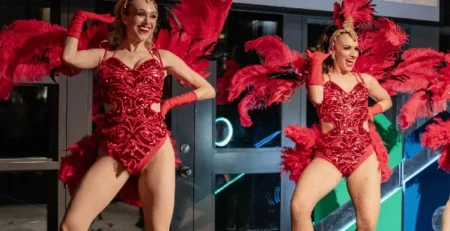
For standard bookings, costume selection is straightforward — choosing from an existing wardrobe of performance-quality pieces that match the event’s brief, whether that is a specific colour palette, a decade aesthetic, or a themed visual concept. A Great Gatsby performance has a defined visual vocabulary: fringe, beading, art deco colour, feathered headpieces. A Las Vegas showgirl show has its own: sequined bodysuits, theatrical headdresses, the kind of scale and sparkle that reads across a large room from twenty metres away.
For custom bookings, costume development can involve sourcing new pieces, commissioning alterations, or constructing elements from scratch. A client who wants performers in their brand’s specific Pantone colours, or a couple who want the dance show to reflect their wedding’s exact floral palette, requires costume work that cannot be done from existing stock alone. This is one of the primary reasons custom productions need six to eight weeks of lead time — the costume timeline is often the longest single element in the production process.
For LED Femme Bot performances, costume preparation includes a technical component that goes beyond fabric and fit: the LED systems embedded in the suits need to be tested, programmed, and verified against the performance environment before the event. Brand logo display panels are uploaded, animated sequences are set, and colour programming is confirmed against the room’s expected ambient lighting. This technical preparation typically takes place in the week before the event and requires the client’s brand assets to be submitted well in advance.
Stage Four: Rehearsal
Rehearsal is where the choreography moves from concept to body — and where the difference between a good performance and a great one is made. For an established themed show with experienced performers who know the material, rehearsal is about precision: sharpening transitions, confirming timing against the final music track, and running through any event-specific adaptations until they feel native to the routine.
For new or custom productions, rehearsal is a more extended process. Early rehearsals are exploratory — learning the choreography, finding the shapes and dynamics, building the physical vocabulary of the piece. Later rehearsals are about consolidation and confidence: running the full performance from start to finish, identifying weak points, tightening timing, and building the kind of muscle memory that allows a performer to execute flawlessly even when the adrenaline of a live event environment is running high.
Professional performers approach rehearsal very differently from amateur ones. The goal is not to be able to perform the choreography when everything goes right. The goal is to perform it when the DJ cues the music a few seconds early, when the venue floor is slightly different from the rehearsal studio floor, when the lighting is brighter or darker than expected, and when two hundred people are watching. That level of performance security only comes from repetition — and it is why the best live event performances look completely effortless even in challenging conditions.
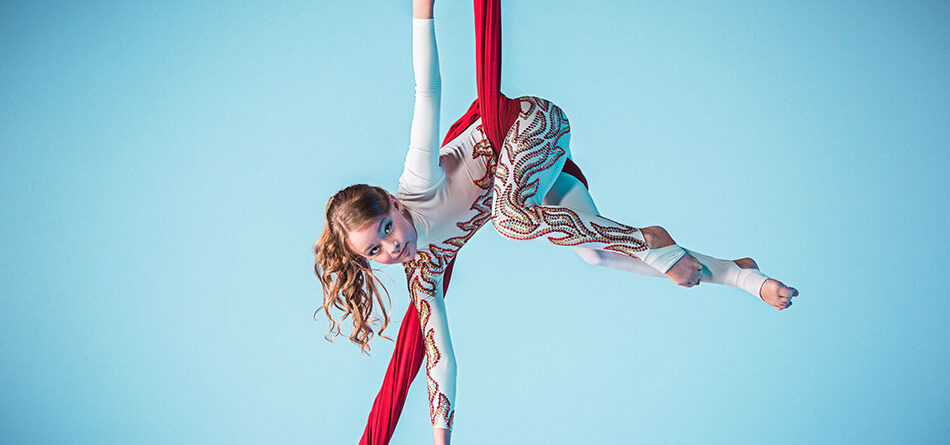
For aerial performances, rehearsal also includes equipment checks and rigging tests. The apparatus — silk, hoop, ribbon, or trapeze — needs to be confirmed against the performer’s specific weight and performance style, and the rigging must be verified at the actual venue before the event where possible. Safety is not a rehearsal-day consideration. It is built into the preparation weeks before the performance.
Stage Five: Venue Coordination
Professional event entertainment does not arrive at a venue cold. In the days before a performance, the StarMuse coordination team is in communication with the venue’s event coordinator and AV team to confirm every logistical detail.
This includes the load-in window — the time allocated for performers to arrive, set up, and prepare before guests enter the space. For most performances this is a minimum of forty-five minutes to an hour before the performance. For productions involving aerial rigging, large props like the champagne glass performer, or extensive costume and makeup preparation, it may be two hours or more.
Staging requirements are confirmed: platform positions for gogo dancers, stage dimensions for choreographed shows, ceiling rigging points for aerial acts. AV requirements are shared with the venue’s technical team — the performance music track is provided in the correct format, cue points are confirmed, and volume and speaker positioning are discussed so the performance music fills the room correctly without overpowering the space.
Lighting requirements are also confirmed at this stage. A LED performance that relies on dimmed ambient lighting for visual impact needs the venue to be ready to drop the lights at the right moment. A theatrical showgirl production benefits from a spotlight or wash that makes the costumes read at their full visual scale across a large room. A belly dancer performing during a cocktail hour in a warmly lit space needs nothing beyond the existing venue lighting — but that still needs to be confirmed rather than assumed.
For events where StarMuse is providing full event management, this coordination extends to the entire event timeline — not just the entertainment slot. The performance is mapped against the event’s run of show, confirmed with the MC or host, and communicated to everyone responsible for any element of the evening.
Stage Six: The Day of the Performance
Performance day has a rhythm of its own. Performers arrive during the load-in window, begin hair and makeup — which for elaborate theatrical productions can take sixty to ninety minutes — and complete a final run-through of the performance in their costumes where the venue space allows.
This final preparation stage is not about learning the choreography again. It is about arriving at the performance mentally and physically ready to deliver it at the level the performance deserves. Professional performers develop their own pre-show routines — warm-up sequences, mental preparation practices, final costume and makeup checks — that allow them to step onto the floor in the right state regardless of what the day has looked like up to that point.
For the StarMuse team coordinating the event, the hour before the performance is the most active part of the day. Final music cues are confirmed with the DJ or AV team. Timing is verified against the event’s actual schedule — because corporate events almost never run exactly to schedule, and experienced companies plan for that reality rather than assuming the timeline will hold. The on-site coordinator maintains communication between the performers, the venue team, and the event host so that any change — a speech running long, a dinner service delayed — is absorbed without disrupting the performance.
When the performance begins, all of that preparation becomes invisible. Guests see dancers who move with complete confidence, costumes that look perfect from across the room, and music that hits every beat exactly when it should. What they are actually seeing is eight to twelve weeks of work compressed into fifteen minutes of performance.
What Happens After the Performance
The performance does not end when the last set finishes. For roaming acts — belly dancers, mirror performers, champagne skirt performers — the post-performance period often involves continued guest interaction: posing for photographs, weaving through the crowd, and sustaining the atmosphere the performance created until the end of the event.
For headline acts, the post-performance period is about guest interaction and content. The performers who just delivered a Las Vegas showgirl show or an aerial silk performance are typically the most photographed people in the room for the thirty minutes that follow. Experienced performers understand this and remain in costume, engaged, and accessible for the photography and social moments that the performance generates.
From a production standpoint, the post-performance period involves pack-down — costumes, props, equipment, and any staging elements are carefully packed and transported. For LED equipment and aerial apparatus in particular, post-event equipment care is an important part of maintaining the production quality that clients book.
The final step is a post-event debrief. For returning clients and established venue relationships, this is informal — a quick conversation about what worked well and what could be adjusted for next time. For new clients, it is an opportunity to gather feedback, confirm any photographs or video content the client wants to use, and begin the conversation about future bookings.
Why the Process Matters
Event entertainment is one of the few things in event planning where the visible output — the fifteen-minute performance — gives almost no indication of the work that produced it. A beautifully choreographed show and a hastily assembled act can look superficially similar from the guest announcement. The difference becomes apparent the moment the music starts.
The process described above is not unique to StarMuse — it is what any genuinely professional dance entertainment company in Toronto should be doing. The reason it matters to understand it is that it gives event planners and hosts a framework for evaluating who they are actually booking. A company that cannot explain its costume preparation process, that has no defined rehearsal timeline, that does not proactively communicate with your venue coordinator — these are gaps in the process that almost always surface as problems on the night.
When a guest stops mid-conversation to watch a performance, or when a corporate client messages the next morning to say the entertainment was the highlight of the evening, that moment is the product of a process that started weeks before the event and involved far more than what was visible from the dance floor.
That is what professional live event entertainment looks like from the inside. And it is why, at StarMuse Entertainment, every booking — from a single gogo dancer at a nightclub residency to a full multi-act production at a corporate gala — goes through the same rigorous preparation process, every time.
If you are planning an event in Toronto and want to discuss what a performance would look like for your specific occasion, get in touch with the StarMuse team. The conversation about what is possible always starts with the brief — and the brief starts with us understanding exactly what you want your guests to feel.







Leave a Reply