
There’s a specific feeling that separates a genuinely luxurious event from one that simply cost a lot of money. You’ve likely experienced both. One leaves you slightly overstimulated, aware of how much was spent, and ready to leave earlier than planned. The other leaves you relaxed, present, and already asking the host when the next one is. The difference rarely comes down to budget. It comes down to luxury event design choices: restraint, cohesion, pacing, and intentionality, four principles that separate a premium event from an excessive one.
This distinction matters more now than it has in years. As luxury event planning trends shift year over year, hosts and planners are increasingly aware that piling on more entertainment, more decor, and more sensory noise doesn’t automatically read as premium. In fact, it often does the opposite. This piece breaks down exactly what makes an event feel elevated rather than overloaded, and how to apply that thinking whether you’re planning a private celebration, a corporate gala, or a wedding reception in Toronto.
Luxury Isn’t About More — It’s About Restraint
The instinct at almost every stage of event planning is to add: one more floral installation, one more specialty act, one more course, one more surprise moment. Each addition feels justified on its own. Stacked together, though, they compete with each other, and the event stops feeling curated and starts feeling crowded.
Genuinely luxurious events tend to do less, but execute what they do at a noticeably higher level. A single, exceptional live performance placed at exactly the right moment in the evening creates more impact than five mediocre ones layered on top of each other. A tightly edited menu executed flawlessly reads as more premium than a sprawling buffet trying to please everyone. Restraint isn’t the absence of ambition; it’s ambition applied to fewer, better-chosen elements.
The Four Pillars of Understated Luxury Event Design
Across weddings, corporate galas, and private celebrations, the events that consistently feel premium share four underlying qualities. None of them require a bigger budget. All of them require more deliberate decision-making.
1. Restraint
Restraint means knowing what to leave out. It’s the discipline to choose one striking visual moment instead of six competing ones, one thoughtfully curated menu instead of an overwhelming spread, one exceptional entertainment act instead of a lineup that never lets the evening settle. Restraint is often the hardest principle to hold onto, because every individual addition feels reasonable in isolation. The skill is stepping back and evaluating the whole picture, not just each piece.
2. Cohesion
Cohesion is what makes an event feel like one considered experience rather than a collection of separate decisions made by different vendors. Lighting, music, decor, catering, and entertainment should all speak the same visual and emotional language. A ballroom with a soft, warm palette loses its impact if the entertainment lineup, signage, or favours clash tonally with that mood. Cohesion is the throughline that makes guests feel like every detail was considered together, not bolted on separately.
3. Pacing
Pacing is frequently the most overlooked pillar, and arguably the one guests feel most directly, even if they can’t name it. An evening that moves too quickly feels rushed and transactional. One that drags feels aimless. The best events are paced with deliberate peaks and quieter stretches: a striking entrance, a moment of stillness during dinner, a high-energy entertainment segment, a natural wind-down. That rhythm is what makes a night feel effortless rather than exhausting, and it’s almost entirely a design decision, not a budget one.
4. Intentionality
Intentionality is the underlying discipline that makes the other three possible. Every element in a well-designed event should have an answer to the question “why is this here?” beyond simply “because it looks impressive” or “because other events have it.” A specialty performance chosen because it fits the evening’s arc reads completely differently from the same act booked simply because it’s trending. Guests may not consciously register intentionality, but they feel its absence immediately, usually as a vague sense that something is trying too hard.
Where Excess Creeps In (Even With the Best Intentions)
Most over-designed events don’t start out that way. Excess tends to accumulate gradually, one well-meaning addition at a time. A few common patterns worth watching for:
- Entertainment stacking. Booking multiple specialty acts back-to-back without spacing, so each one competes for attention instead of landing as its own moment.
- Decor without a focal point. Filling every visual surface with florals, lighting, or installations until nothing stands out because everything is competing at once.
- Menu overreach. Adding courses or stations to appear generous, when a shorter, more deliberate menu executed well almost always reads as more premium.
- Timeline overcrowding. Scheduling too many “moments” into one evening, leaving no room for guests to simply enjoy the space and each other’s company between planned segments.
- Chasing trends over fit. Adding an element because it’s popular on social media rather than because it genuinely fits the event’s tone, venue, and guest list.
None of these mistakes come from a lack of budget. They come from treating “more” as a proxy for “better,” when the two aren’t actually connected.
Cohesion in Practice: Making Every Element Speak the Same Language
Cohesion is easiest to understand by looking at how it breaks down. Imagine a corporate gala with a sleek, modern, monochrome visual identity, elegant lighting, minimal florals, a tightly art-directed stage design, paired with entertainment that feels loud, colourful, and tonally mismatched to everything else in the room. Individually, both the design and the entertainment might be excellent. Together, they undercut each other.
The fix isn’t necessarily choosing “quieter” entertainment across the board. It’s choosing entertainment that’s been selected with the same intentionality as the rest of the room, whether that means a performance style that visually complements the space, a colour palette that ties into the broader design, or a pacing choice that fits the mood being built throughout the evening. This is where entertainment becomes a design decision, not just a scheduling one.
Pacing: The Rhythm That Makes an Event Feel Effortless
Pacing is the pillar most planners underweight, largely because it’s harder to visualize on a mood board than florals or lighting. But guests experience an event in time, not as a static image, which makes pacing arguably the single biggest driver of how “effortless” a night feels.
A well-paced evening typically moves through distinct phases: an arrival period that sets tone without overwhelming, a settled stretch for dinner or conversation, one or two clearly defined high-energy peaks, and a natural close rather than an abrupt one. Entertainment often functions as the punctuation in that structure. A single, well-placed performance segment, positioned right after dinner service rather than competing with it, does more for the evening’s rhythm than the same act would if it were squeezed in as background noise during cocktail hour.
Entertainment as a Case Study in Restraint
Entertainment is one of the clearest places to see the difference between excess and intentional luxury, because it’s also one of the easiest categories to over-book. The instinct to add “just one more act” is strong, especially for milestone celebrations and large-scale corporate events, but the events that read as most premium are almost always the ones where entertainment was curated, not accumulated.
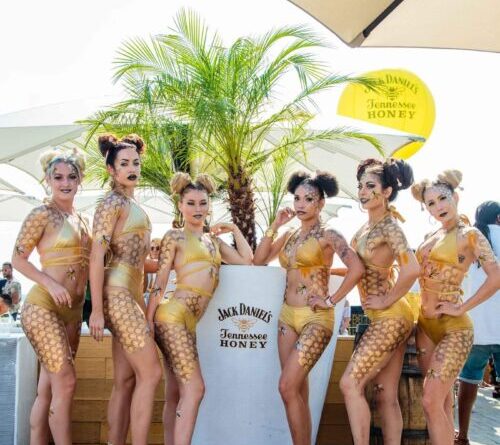
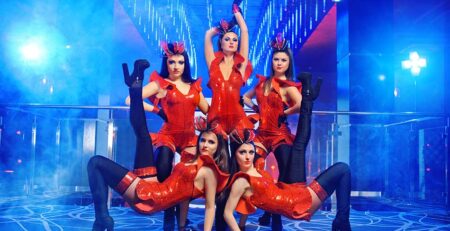
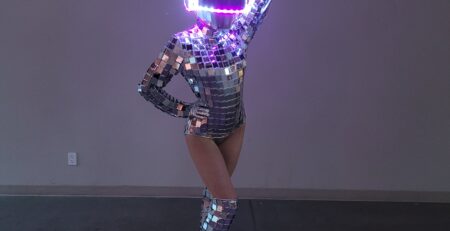
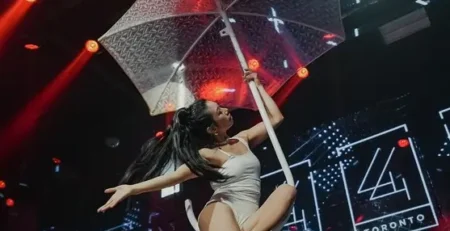
In practice, that might mean choosing one exceptional performance over an evening’s worth of miscellaneous acts, a single, visually striking specialty act placed at the right emotional peak of the night rather than several competing for attention, or a tightly art-directed dance show that’s been built specifically around the event’s theme instead of a generic booking. Even high-impact elements like LED dancers and lasers read as considered rather than excessive when they’re positioned as one deliberate moment in the evening’s arc, not layered on top of three other visual acts happening simultaneously.
This is really the core idea behind understated luxury entertainment: it’s not about scaling back ambition, it’s about applying that ambition to fewer, better-chosen moments, each one earning its place in the evening rather than simply filling time.
Intentionality: The “Why” Behind Every Choice
If restraint, cohesion, and pacing are the visible outcomes, intentionality is the process that produces them. It shows up as a habit of asking, for every element under consideration, what specific role it plays in the guest experience. Does this decor choice support the evening’s mood, or simply fill space? Does this entertainment act align with the emotional arc of the night, or was it added because it photographs well?
This kind of scrutiny is uncomfortable, because it often means cutting things that are individually impressive but collectively unnecessary. It’s also the single clearest differentiator between events that feel expensive and events that feel luxurious. Expense is visible in a line-item budget. Intentionality is visible in the room.
A Practical Checklist for Understated Luxury Events
For hosts and planners applying these principles to an upcoming event, a few concrete questions can help keep restraint, cohesion, pacing, and intentionality front of mind through the planning process:
- If I removed this element entirely, would the evening feel worse, or just smaller? If the answer is “just smaller,” it may not be essential.
- Does every visual and entertainment choice reinforce the same overall mood, or are they pulling in different directions?
- Is there room in the timeline for guests to simply talk to each other, or is every minute programmed?
- Are there two or more elements competing for the same moment of guest attention? If so, one likely needs to move or go.
- Would I make this choice if no one else could see it, or is it primarily there to be seen?
None of these questions require a bigger budget to answer well. They require a willingness to edit, which is often the most underrated skill in premium event design.
How This Plays Out for Toronto Hosts
Toronto’s event scene spans everything from intimate private celebrations to large-scale corporate galas, and the principle holds across all of them: the events that feel most premium are rarely the ones with the longest vendor list. They’re the ones where every choice, from venue to entertainment to pacing, was made with a clear sense of what the evening was actually trying to achieve.
For hosts building a premium event in the city, that often means working with an entertainment partner who can help curate rather than simply supply acts, someone who asks about the arc of the evening before recommending a lineup, rather than defaulting to the biggest package available. That’s the difference between an entertainment booking that adds to the noise and one that becomes the moment guests remember.
What Restraint Looks Like Across Different Event Types
Restraint doesn’t look identical from one event to the next, because the baseline expectations differ. What reads as tightly edited at an intimate dinner would feel sparse at a five-hundred-guest gala, and what feels appropriately full at a corporate product launch might feel overwhelming at a private birthday celebration. Applying restraint well means calibrating to the event’s own scale, not importing a formula from somewhere else.
Weddings
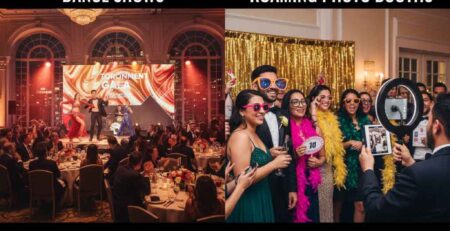
For weddings, restraint often shows up as resisting the pressure to include every trend seen on social media in a single celebration. A couple doesn’t need a photo booth, a late-night snack bar, a fireworks display, a live band, and three specialty performances all in one reception. Choosing two or three signature moments, and executing each one exceptionally, almost always produces a more memorable night than trying to check every box.
Corporate Galas
For corporate events, restraint frequently means resisting the instinct to over-program the agenda. A gala that leaves space between the formal program and the entertainment segment gives guests room to network and actually absorb the evening, rather than moving from one scheduled activity to the next without a pause.
Private Celebrations
For milestone birthdays and private parties, restraint often comes down to guest list discipline and a tightly defined theme, rather than trying to entertain every possible interest in the room. A smaller, more curated guest list paired with one standout entertainment moment tends to feel more special than a larger gathering with entertainment split across too many competing interests.
The Psychology of Why Restraint Reads as Premium
There’s a reason understated, well-paced events consistently register as more luxurious, even when guests can’t articulate exactly why. Cognitively, an environment with fewer, higher-quality focal points is easier to process and enjoy than one competing for attention across every surface and moment. When a room, a menu, or an entertainment lineup asks less of a guest’s attention at any given moment, that guest has more capacity left over to actually feel present, rather than mentally cataloguing everything happening around them.
This is closely related to why “trying too hard” reads so clearly, even to guests who couldn’t name the specific design choices behind it. Excess often signals insecurity about whether the event is impressive enough on its own merits, while restraint signals confidence that a few, well-chosen elements will carry the evening. Guests pick up on that confidence, even subconsciously, which is part of why understated events so often get described as feeling more expensive than they actually were.
Common Objections to Restraint (and Why They Don’t Hold Up)
A few concerns come up repeatedly when hosts and planners consider trimming down an event’s scope, and each is worth addressing directly.
“Won’t guests feel like we didn’t spend enough?”
Guests rarely evaluate an event by counting the number of elements present. They respond to how the evening felt to move through. A tightly curated event with clear high points almost always reads as more considered, and by extension more premium, than a crowded one, regardless of the actual budget behind either.
“We’re paying for a big venue, shouldn’t we fill it?”
Filling space and filling it well aren’t the same task. A large venue with a few carefully placed focal points, generous negative space, and thoughtful lighting often reads as more luxurious than the same venue packed with decor and activity in every corner. Scale doesn’t require density.
“What if guests get bored without constant entertainment?”
This is where pacing does the real work. Guests rarely get bored from a lack of programmed activity; they get bored from a lack of rhythm, when the evening either drags without a clear direction or moves so relentlessly that there’s no space to actually enjoy any single moment. A few well-placed high points, with room to breathe between them, keep an evening engaging without requiring constant stimulation.
Frequently Asked Questions About Luxury Event Design
What is the difference between a luxurious event and an expensive one?
An expensive event simply spends more; a luxurious one spends deliberately. Cost can buy better materials, more skilled vendors, and more elaborate production, but it doesn’t automatically create the sense of ease and coherence that makes an event feel genuinely premium. Two events with identical budgets can feel completely different depending on how intentionally that budget was allocated.
How do you avoid an event feeling excessive?
The most reliable way is to cut, not add. Before finalizing a guest experience, review every planned element, from decor to entertainment to favours, and ask whether it earns its place in the evening. Elements that exist mainly to signal spending rather than to serve the guest experience are usually the ones worth removing.
How many entertainment acts should a luxury event include?
There’s no fixed number, but the more useful question is whether each act has a distinct role in the evening’s arc. A single exceptional performance placed at the right moment usually creates more impact than several competing acts layered on top of each other, especially in mid-sized venues where multiple simultaneous elements can feel cluttered rather than abundant.
Why does pacing matter as much as decor in luxury event design?
Decor shapes what a room looks like in a single photograph; pacing shapes how the entire evening feels to someone actually living through it. A beautifully designed room can still feel exhausting if the evening is packed too tightly, and a modestly decorated one can feel luxurious if the night unfolds with room to breathe.
Does a smaller budget mean an event can’t feel luxurious?
No. Restraint, cohesion, pacing, and intentionality are design decisions, not budget line items. A modestly budgeted event with a clear, consistent point of view will almost always read as more luxurious than a lavishly funded one that lacks direction, because guests respond to coherence and care, not simply to spend.
Building an Event That Feels Effortless, Not Excessive
Premium event design isn’t about how much is happening in the room. It’s about how considered each element feels once it’s there. StarMuse Entertainment works with hosts and planners across Toronto to curate entertainment that fits the arc of the evening, rather than simply filling a schedule, drawing from a full roster spanning dance shows, specialty and mirror acts, LED dancers and lasers, belly dancers, and gogo dancers.
If you’re planning a wedding, corporate gala, or private celebration and want entertainment chosen to complement your event’s design rather than compete with it, contact StarMuse Entertainment or book a consultation online to talk through what your evening actually needs.
Sources
- Southern Bride — Luxury Event Planning Trends for 2026, on wellness and sensory-led event design
- Kesh Events — 2025 Luxury Event Trends, on intentionality and storytelling in high-touch celebrations
- Veranda — Designers Just Declared Quiet Luxury Is Out for 2026, on the shift away from uniform minimalism toward considered personality
- Veranda — 6 Entertaining Trends That Will Shape Luxury Gatherings in 2026, on hosting trends prioritizing comfort and connection over formality
- Wikipedia — Quiet Luxury, background on the broader cultural shift toward understated design






Leave a Reply