

There’s a particular kind of energy that comes from walking into a room and instantly feeling like something important is about to happen. That’s the red carpet effect — the sense of glamour, anticipation, and spectacle usually reserved for award shows and celebrity premieres. It’s the feeling of a flashbulb moment before anyone’s even taken a photo. And increasingly, couples planning weddings in Toronto are asking for exactly that feeling at their reception, not just their ceremony.
The interesting thing about red carpet energy is that it’s rarely about spending the most money. It’s about intention. A wedding with a modest budget and a clear creative vision can feel more glamorous than a lavish reception with no real design thread tying it together. What you need isn’t a Hollywood-sized budget — you need the right combination of entrance design, lighting, roaming performers, and a few unforgettable photo moments, all built deliberately into the flow of the night rather than bolted on as an afterthought.
This guide walks through exactly how to build that feeling into a wedding reception, section by section — from the moment guests arrive to the last song of the night.
Why Couples Are Moving Beyond the Traditional Reception Format
For a long time, the standard wedding reception followed a predictable script: cocktail hour, dinner, speeches, first dance, open floor, cake cutting, more dancing, goodbye. It works, but it’s also become so familiar that it rarely surprises anyone — including the couple.
What’s changed in recent years is that couples are increasingly treating their reception the way event producers treat a live show: as something with pacing, peaks, and deliberate emotional beats. Guests today have been to dozens of weddings. They know the format. That familiarity is exactly why more couples are looking for ways to break the pattern — not by throwing out tradition entirely, but by layering moments of genuine spectacle into a structure guests already know and feel comfortable inside.
Red carpet styling fits naturally into that shift, because it’s built on the same idea Hollywood has used for decades: create anticipation, deliver a visual payoff, and give people something worth remembering — and photographing — along the way.
Also read: Wedding Entertainment in Toronto: What Couples Are Choosing
From Weddings to Corporate Parties: How a Roaming Champagne Dress Can Transform Your Toronto Event
1. Start With a Real Entrance
Red carpet energy begins the moment guests arrive — not when dinner starts, and definitely not when the DJ finally gets the floor moving after dessert. A proper entrance sets the emotional tone for everything that follows, and it’s one of the most consistently overlooked parts of wedding planning. Most budgets go toward the ceremony, the dinner, and the dance floor, leaving the arrival experience as an afterthought — a sign-in table, maybe a seating chart on an easel, and not much else.
Think beyond a simple welcome sign. A dramatic entryway with directional lighting, a step-and-repeat backdrop for photos, and even a literal red carpet runner instantly signals to guests that this isn’t a standard reception — it’s an event they were invited to be part of. Even something as simple as warm uplighting flanking the entrance, or a floral arch guests have to walk through, changes the emotional register of the first thirty seconds inside the venue.
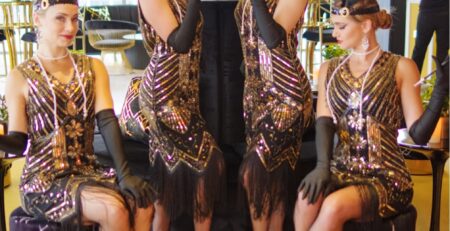
Pair that arrival design with a roaming performer greeting guests as they step inside. This is where couples searching for a strolling champagne skirt performer to hire in Toronto often land, since a champagne skirt performer serving drinks at the entrance does double duty as both hospitality and visual spectacle. Guests get a drink in hand and a photo opportunity in the same thirty seconds, and it photographs like a scene lifted straight from a premiere red carpet rather than a standard cocktail hour.
Venue type matters here too. A grand hotel ballroom with a long entry corridor can support a full step-and-repeat setup and a longer walk-in moment. A more intimate venue — a restaurant buyout, a smaller event space, or a backyard tent — might only have room for a compact welcome moment, but the same principles apply at a smaller scale: warm lighting, a clear visual focal point, and one performer or detail that signals “this is going to be different.”
2. Treat the Reception Like a Production, Not Just a Party
The difference between a nice reception and a red-carpet-level reception usually comes down to production value — a term borrowed from live event and concert planning, but one that applies just as well to weddings. Lighting design, sound quality, and staging matter as much as which performers you book, because they determine how those performers actually land in the room.
Couples who want to hire dancers for their wedding reception in Toronto increasingly ask for choreography built specifically around lighting cues — a first dance that transitions into a synchronized performance, or a surprise routine that erupts the moment the lights shift from warm ambient to something more dramatic. This kind of built-in production thinking is what separates a forgettable dance floor moment from one guests are still talking about a year later. It’s not just what happens; it’s how it’s staged.
Sound design deserves the same attention. A red carpet moment loses most of its impact if the transition between the band, the DJ, and any live performance elements is clumsy or awkwardly timed. This is where working with an experienced entertainment coordinator — rather than booking every element separately and hoping they sync up on the night — genuinely pays off. A well-run reception has a single point of coordination between the DJ, the performers, and the venue’s lighting or AV team, so cues land exactly when they’re supposed to.
If your venue allows it, uplighting along the walls, a lit dance floor, or even a few LED wing dancers booked for a single dramatic number can transform a standard ballroom into something that feels considerably more high-end than the room actually cost to book. Lighting is, dollar for dollar, one of the most cost-effective ways to elevate a space — it changes the entire feel of a room without requiring a full venue renovation or an enormous décor budget.
3. Bring in Roaming Glamour
Static entertainment — a band or DJ set up in one corner of the room — only covers one part of the reception experience. Red carpet events, by contrast, are defined by movement: performers circulating through the crowd, engaging guests directly, and keeping visual energy high throughout cocktail hour and beyond, long before the formal dancing even starts.
This is where roaming acts earn their keep, and where a lot of the “how did they think of that” moments actually come from. Mirror costume performers are a favorite for exactly this reason — anyone looking to hire mirror performers in Toronto for a wedding is usually chasing that reflective, almost otherworldly glamour that catches candlelight and camera flashes in equal measure. A performer in full mirrored costuming moving slowly through a candlelit reception creates a genuinely cinematic visual that static decor simply can’t replicate, no matter how elaborate the centerpieces are.
Belly dancers serve a similar purpose but with a very different energy — warmer, more personal, and deeply rooted in a performance tradition built on connection rather than spectacle alone. Couples looking to hire belly dancers for a wedding in Toronto often use them specifically during cocktail hour, because the performance style naturally invites guest interaction, drawing people in close rather than simply being watched from a distance across the room. It’s a different kind of “wow” — less about scale, more about presence.
The key with any roaming performer is matching the energy to your guest list. A large, multigenerational wedding with guests ranging from young children to grandparents benefits from performers who can read a room and adjust — dialing up the spectacle for one group and softening into something more approachable for another. This is one of the reasons experienced performers, rather than one-off freelance bookings, tend to deliver a noticeably better guest experience: they’ve done enough weddings to know how to work a mixed crowd.
4. Build a Signature Photo Moment
Every red carpet event has that one moment everyone photographs — the shot that ends up on every guest’s phone and eventually their social feed. Weddings deserve the same kind of built-in photo opportunity, and the good news is that it doesn’t have to be complicated or expensive to feel intentional.
A growing number of Toronto couples are booking a life-size champagne glass performer for their wedding as exactly this kind of centerpiece — a performer stationed inside an oversized glass, pouring drinks or striking poses as guests gather around for photos throughout the evening. It’s part sculpture, part performance, and it becomes the unofficial photo booth of the night without anyone having to line up or wait for a scheduled slot.
For couples who want a life size martini glass for their Toronto wedding specifically, the prop tends to work best positioned near the bar or cocktail hour space, where guests are already gathering and have time to stop, take photos, and linger without disrupting the flow of the room. Paired with good lighting, it becomes one of the most photographed corners of the entire reception — often more so than the actual bar itself.
Of course, a dedicated photo booth rental in Toronto still earns its place too — especially for capturing more candid, playful moments later in the night once the formal photography wraps up and guests have had a few drinks. Many couples run both: a signature prop for early, elegant shots during cocktail hour, and a full photo booth setup for the looser, more chaotic fun once the dance floor opens later in the evening. The two serve genuinely different purposes — one is about elegance and composition, the other is about spontaneity — and having both covers the full emotional range of the night.
5. Let the Dance Floor Be the Finale
If the entrance is the opening act, the dance floor is the finale — and it deserves to be treated that way rather than simply left to whatever the DJ decides to play once dinner wraps up. This is where a lot of the visual “wow” factor built earlier in the night should pay off, and where couples have the most room to create a genuinely surprising moment.
Couples who booked LED dancers earlier in the planning process often time their appearance for right after the first dance, using the moment to transition the room’s energy from formal and sentimental to celebratory and high-energy. A short, high-impact performance — lights cutting to darkness, a glowing routine building in intensity, then the DJ dropping straight into the next song as the lights come back up — creates a natural bridge between the ceremonial part of the reception and the party that follows. It also solves a common pacing problem: the awkward lull that often happens right after speeches and the first dance, before the dance floor properly fills up.
For couples drawn to something more theatrical, a brief aerial performance or a compact circus-style act can serve the same structural function, giving guests a genuine spectacle before the open dance floor takes over for the rest of the night. These acts work particularly well in venues with higher ceilings, where there’s actual vertical space for the performance to breathe.
6. Choosing the Right Performers for Your Specific Guest List
One thing that separates a reception that feels like a cohesive red carpet event from one that feels like a random collection of cool ideas is thoughtful curation. It’s tempting to book every eye-catching act you come across — a mirror performer, a belly dancer, LED dancers, an aerialist, a giant martini glass — but more isn’t always better. Too many disconnected spectacle moments can actually work against the “considered” feeling you’re going for, turning an elegant reception into something that feels more like a variety show.
A better approach is to choose two or three performance elements that genuinely complement each other and the story you’re telling with your wedding design. If your wedding has a glamorous, Old Hollywood aesthetic, a mirror performer and a champagne skirt server will feel cohesive together. If your reception leans more modern and high-energy, LED dancers paired with a striking photo prop like a giant martini glass will read as intentional rather than scattered. Matching entertainment style to your overall wedding aesthetic — rather than picking acts individually because each one is impressive on its own — is what makes the night feel like a single, well-produced experience rather than a checklist of add-ons.
7. Color Palette and Costuming Cohesion
It’s easy to overlook, but performer costuming is part of your wedding’s visual design just as much as your florals, linens, or bridesmaid dresses. A champagne skirt performer in a costume that clashes with your color palette will still look impressive in photos, but it will also look slightly out of place — a beautiful detail that doesn’t quite belong to the rest of the day.
Many entertainment companies working in the Toronto wedding market are used to coordinating costuming with a couple’s color scheme, whether that means adjusting a champagne skirt performer’s fabric tones, choosing mirror costuming that reflects warm versus cool lighting depending on your palette, or aligning LED colors with your florals and décor for the big dance floor moment. It’s a small detail, but it’s often the difference between entertainment that looks bolted onto the wedding and entertainment that looks like it was designed specifically for it.
8. A Sample Timeline: Where Entertainment Fits Into the Night
One of the most common questions couples have once they start booking performers is simply: when does this actually happen? Here’s a general framework many red-carpet-style Toronto receptions follow, though it can flex depending on your venue and guest count:
- Arrival / Cocktail hour: Roaming champagne skirt performer or mirror costume performer greeting and photographing with guests; signature photo prop (champagne glass or martini glass) set up near the bar
- Dinner service: Entertainment pauses or shifts to background ambiance, allowing space for speeches and toasts
- First dance: Traditional, intimate moment for the couple, often transitioning directly into the next entertainment beat
- Post-first-dance transition: LED dance performance or short choreographed number to shift the room’s energy toward celebration
- Open dance floor: DJ or band takes over, with photo booth rental available for the rest of the night
- Late night: Optional second surprise moment — a late-night snack station reveal, sparkler exit, or brief encore performance to close out the night
This structure isn’t a rigid formula, but it illustrates the underlying principle: entertainment works best when it’s placed deliberately at specific emotional beats in the evening, rather than running continuously in the background the entire time. Spacing out the “wow” moments makes each one land harder.
9. Budgeting for Red Carpet Style Without Overspending
Red carpet styling can absolutely be built at multiple budget levels, and it’s worth thinking about your entertainment spend in tiers rather than trying to do everything at once.
At an essential level, one well-chosen element — a strolling champagne skirt performer during cocktail hour, or a single striking photo prop like a life size martini glass — can carry most of the “wow” factor for a smaller or more budget-conscious wedding. It’s a single, concentrated investment rather than a spread-out one, and it still delivers a genuinely memorable, photographable moment.
At a mid-range level, couples typically combine two elements: a roaming performer for cocktail hour and a short choreographed dance moment later in the night, often timed around the first dance transition. This tier tends to deliver the most noticeable “this wedding feels different” reaction from guests relative to cost, because it covers both the arrival experience and the dance floor finale.
At a full-production level, couples layer in three or more elements — roaming performers, a signature photo prop, LED or aerial dance performances, and coordinated lighting design throughout the venue. This is where the reception starts to feel less like a wedding with some entertainment added and more like a genuinely produced event, but it also requires the most coordination to make sure every element is timed and staged properly rather than just occurring in the same room independently of each other.
Whichever tier fits your budget, the advice from experienced planners is consistent: it’s better to do fewer things exceptionally well than to spread a budget across too many smaller bookings that each feel a little thin.
10. Seasonal and Venue Considerations
Red carpet styling looks different depending on the time of year and the type of venue you’ve booked, and it’s worth planning around those realities rather than fighting them.
A summer wedding in a tented outdoor space has beautiful natural light for most of the reception, which means lighting-dependent moments — like an LED dance performance — land best once the sun has fully set and the tent’s ambient lighting can take over. Outdoor spaces also tend to have more open floor space, which works well for larger roaming performances or a compact aerial setup if there’s rigging support.
A winter wedding in an indoor ballroom, by contrast, offers full control over lighting from the start of the night, which makes it easier to build dramatic lighting cues throughout cocktail hour rather than waiting for darkness. Indoor venues with lower ceilings may not support aerial work, but they’re often better suited to a full step-and-repeat entrance and mirror-costumed performers, since the more contained lighting makes reflective costuming especially striking.
The venue’s floor plan matters just as much as the season. A long entry corridor supports a proper red-carpet walk-in; a venue with guests entering directly into the reception space needs a different approach, like a performer stationed near the door rather than a full processional moment.
11. Common Mistakes to Avoid
A few missteps come up repeatedly when couples try to build red carpet energy into their reception without a clear plan:
- Booking too many disconnected acts without a unifying aesthetic, resulting in a night that feels busy rather than curated
- Underestimating load-in time for props like a life size champagne glass or martini glass, which need to be set up, tested, and positioned before guests arrive
- Not coordinating performance timing with the DJ or band, leading to awkward overlaps or dead air between moments
- Choosing performers based on photos alone without checking recent video, since a still image doesn’t tell you how a performer actually holds a room
- Skipping the costuming conversation, resulting in beautiful performers whose outfits don’t match the rest of the wedding’s visual design
Most of these are avoidable simply by starting the entertainment conversation early and working with a team that coordinates the full experience rather than booking each element as a separate, disconnected vendor.
Frequently Asked Questions
How far in advance should I book red-carpet-style entertainment for my wedding?
For custom choreography, signature photo props, or multiple coordinated performers, most Toronto couples book four to six months out, especially for weddings during peak season between May and October. Simpler bookings, like a single roaming performer, can sometimes be arranged with less notice depending on availability.
Can performers coordinate directly with my DJ or band?
Yes, and it’s worth requesting this specifically. A well-run entertainment team will connect with your DJ, band, or venue AV coordinator ahead of time to confirm cues, timing, and any technical requirements, so transitions land smoothly on the actual day rather than being figured out in real time.
What if my venue has limited space?
Most of these ideas scale down well. A smaller venue can still support a single roaming performer, a compact photo prop tucked into a corner near the bar, or a short choreographed moment on a smaller dance floor. The goal is intentional design, not maximum scale.
Do I need to choose between traditional wedding elements and this kind of entertainment?
Not at all. Red carpet styling is meant to layer on top of a traditional reception structure, not replace it. Ceremony, dinner, speeches, and the first dance all stay exactly where they normally would — the entertainment simply adds a few additional, deliberately placed moments around that familiar framework.
Bringing Red Carpet Energy to Your Toronto Wedding
StarMuse Entertainment works with Toronto couples to build exactly this kind of layered, cinematic reception — pairing roaming performers with signature photo features and dance floor spectacle so the night feels considered from entrance to last dance, rather than assembled from a list of separate vendors.
For the arrival and cocktail hour, that often starts with a strolling champagne skirt performer or an elegant belly dance performance to draw guests in early and set the tone before dinner even begins. Signature photo moments come courtesy of a life size martini glass performer or a champagne glass feature, both built specifically to become the most photographed corner of the room throughout the evening.
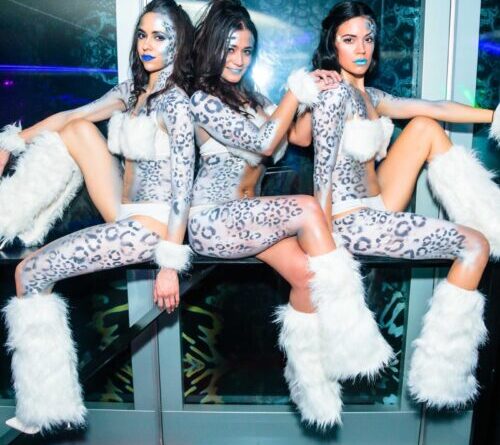
When it’s time for the dance floor to take over, LED dancers and custom-choreographed dance shows deliver the kind of high-impact finale that turns a first dance into a full production moment. Add in photo booth rental coverage for the rest of the night, and a mirror-costumed or body-painted performer for an extra layer of visual drama, and the whole reception starts to feel less like a private party and more like an event the guests were genuinely lucky to be invited to.
That’s the real red carpet effect — not one single expensive gesture, but a night built moment by moment, with enough intention behind each choice that guests never quite stop feeling like something special is happening around them.

Leave a Reply