
Then there are the galas people talk about at the office two weeks later. The ones that show up in guest Instagram stories the next morning. The ones where, years on, someone will say “remember that event at the Fairmont?” and the whole table will immediately know which one they mean.
The difference between those two evenings almost never comes down to budget. It almost always comes down to one decision: whether the organizer treated entertainment as a line item to be minimized or as the architecture of the experience itself.
The Standard Gala Formula (and Why It Produces Standard Results)
The conventional approach to gala planning goes roughly like this: secure the venue, confirm catering, hire an MC, build the award program, add a DJ or a band for the end of the evening, and call it done. Entertainment is an afterthought, something bolted on after the substance of the event has been planned.
The problem is that guests don’t experience a gala as a series of discrete components. They experience it as a continuous feeling. And when entertainment is an afterthought, that feeling is — continuous and forgettable.
The galas that break through do something structurally different. They treat the evening as a story with an arc: a beginning that creates immediate atmosphere, a middle that sustains energy through the longest stretch of the evening (dinner), and an end that sends guests out on a high rather than a slow fade. Entertainment isn’t something they add to that structure. It is that structure.
The Arrival: The Moment Most Galas Waste
Cocktail hour is the most underestimated stretch of any gala. Guests are arriving, finding their people, orienting themselves to the space. It’s also the moment when the entire emotional register of the evening gets set. Walk into a room that feels like a hotel function in progress and you’ll carry that feeling all night. Walk into a room that feels like it has already begun — where something is visually happening — and you are immediately in a different headspace.
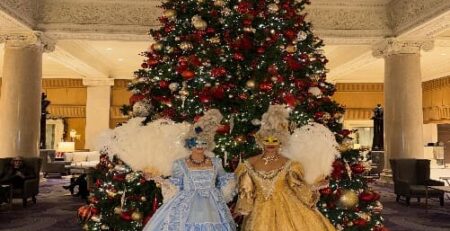
The single highest-impact change most galas can make is to put something alive and visually striking at the entrance. Not a banner. Not a step-and-repeat. A person — in costume, in character, in motion — who signals from the first second that this evening has been designed.
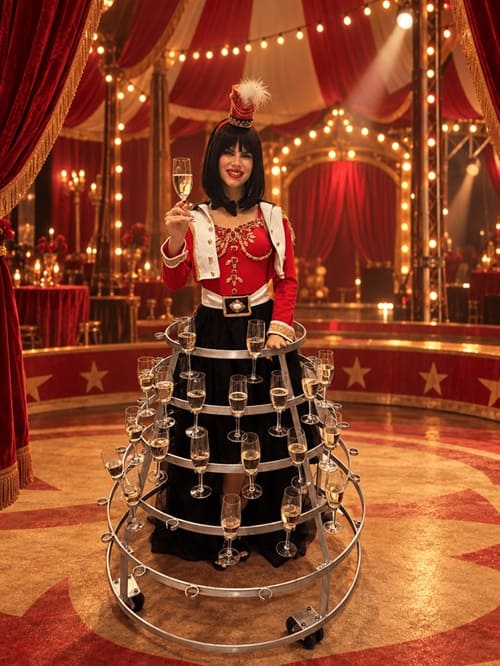
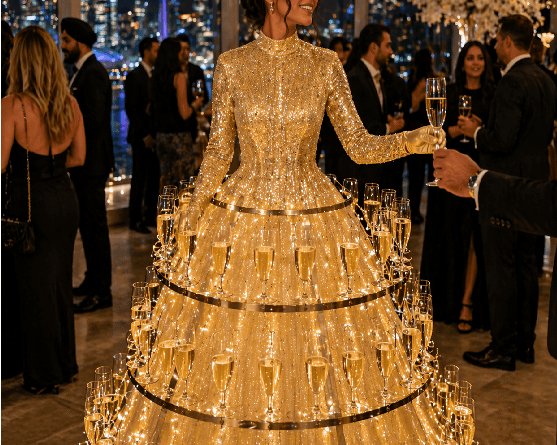
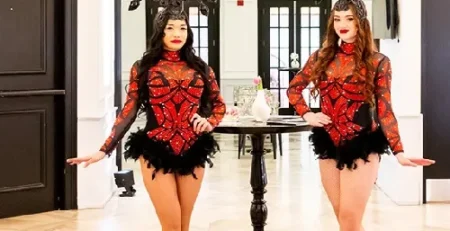
The roaming champagne skirt performer is the most elegant solution to this problem. A performer in a sculptural gown that incorporates a built-in champagne tray circulates through cocktail hour, offering glasses to arriving guests. It is simultaneously a service function and a spectacle. Guests who have never seen it before will stop mid-sentence when it passes them. And because it is photographed constantly, the images end up in attendee stories before the evening is half over — which matters enormously for the perception of an event from the outside.
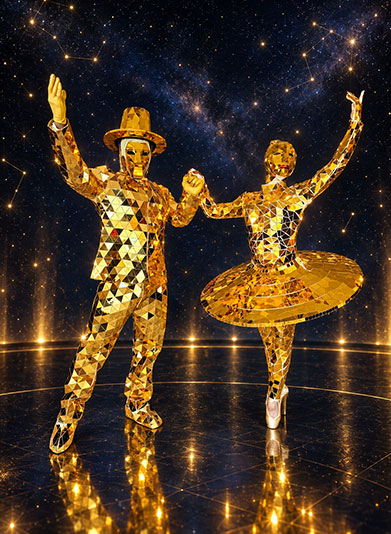
Alternatively, mirror performers positioned near the entrance create an extraordinary first impression through sheer visual strangeness. A performer in a full mirrored costume is not easily processed by the brain — it reflects the room back at itself, draws every eye, and photographs in a way that looks almost too surreal to be real. For galas with a modern or high-fashion aesthetic, it is one of the most striking arrival choices available.
Dinner: The Hour That Kills the Energy (If You Let It)
Here is the honest reality of gala pacing: dinner is where energy goes to die. Guests sit down, food service begins, conversation narrows to the table, and the room-wide electric feeling of cocktail hour dissipates. By the time the main course is cleared, the evening has often quietly deflated — which is precisely when the award program is supposed to begin.
Smart galas solve this with ambient entertainment: performance that fills the visual field during dinner without demanding attention or competing with conversation. It keeps the energy of the room from dropping to a resting state.
LED performers work particularly well in this role. Moving through a dimly lit dinner room, they provide a constant visual pulse — something worth glancing at whenever conversation pauses — without requiring anyone to stop and watch. The effect is subtle but cumulative: the room feels alive in a way that a band playing cover songs in the corner does not.
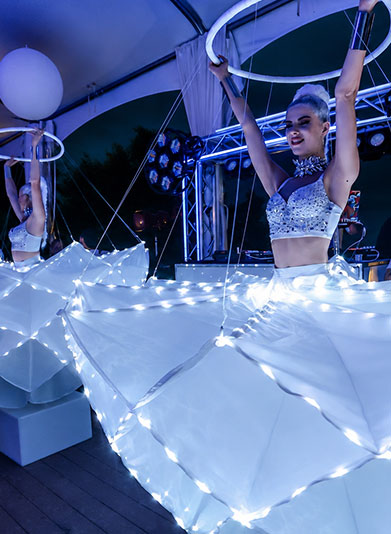
Belly dancers are another underrated choice for dinner entertainment at galas with a warmer or more eclectic aesthetic. The movement is hypnotic without being aggressive, the visual language is rich and international, and a skilled performer can hold the room’s peripheral attention for an entire dinner service without anyone feeling like they are being performed at.

The rule of thumb for dinner entertainment is this: it should raise the room’s ambient energy level, not compete for the room’s focus. The focus belongs to conversation. The entertainment is what keeps the room from going flat between courses.
The Award Program: Where Entertainment Can Make or Break the Pacing
Award ceremonies have a structural problem that most organizers quietly acknowledge and nobody directly addresses: they are, by nature, of uneven interest to the audience. The person receiving an award is thrilled. The people at their table are genuinely pleased. Everyone else in the room is waiting.
Entertainment cannot fix a ceremony with too many categories or speeches that run too long. But it can do something more subtle and more valuable: it can reset the room between segments, breaking up the cadence of the evening so that each award section feels fresh rather than cumulative.
A short performance placed at a natural break in the ceremony — between dinner and the award program, or midway through a long award sequence — does exactly this. It gives the room permission to exhale, shifts the energy, and returns attention to the stage. A dance performance that runs three to five minutes is long enough to shift the atmosphere and short enough that it sharpens focus rather than losing it.
The key word is placement. Entertainment that interrupts the flow of an award program creates friction. Entertainment that slots into natural pauses in that flow creates relief. Work with your entertainment company on the run of show before the event, not the morning of.
The Headline Act: Giving the Evening a Peak
Every memorable event has a peak — a moment that the entire evening builds toward, that guests reference afterward when they describe the night. For most galas, that peak is supposed to be the final award or the CEO’s closing remarks. This is a structural problem. Administrative moments cannot carry the emotional weight of a true peak.
A headline performance, positioned either as the dinner opener or as a true closing act after awards are complete, creates a genuine peak that the evening can organize itself around.
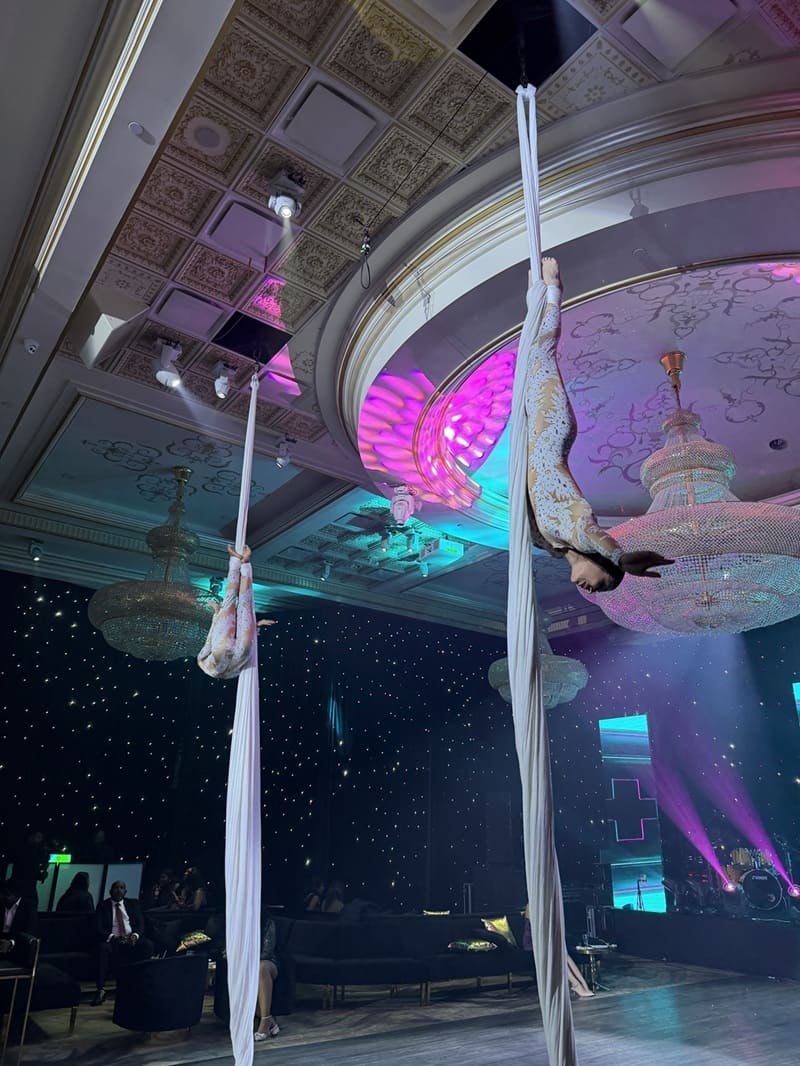
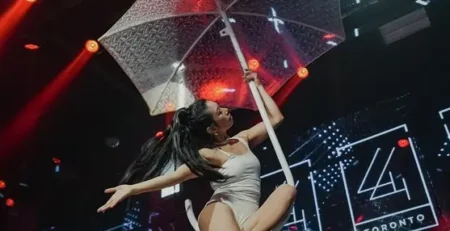
Aerialists are the most reliably spectacular headline choice for a gala that has the ceiling height to accommodate them. The spectacle is genuinely remarkable in a way that requires no preamble and no explanation: a performer suspended above the room, moving in ways that seem to defy what a body should be able to do. It is the kind of performance that stops a room cold — and that guests describe the next day, unprompted, to people who weren’t there.
Cirque-style acts achieve a similar effect and have more flexibility around venue and ceiling requirements. A contortionist, a hand-balancing act, or a floor acrobatics sequence can hold a room of 400 people in absolute silence in ways that nothing else in an event planner’s toolkit reliably achieves.
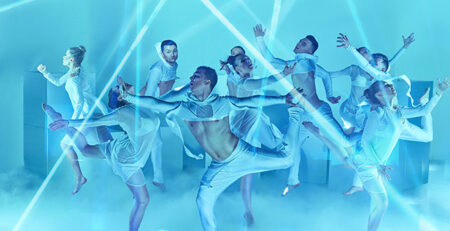
For galas with a high-energy close — where the goal is to send guests onto a dance floor rather than out the door — an LED dance show as the headline is the stronger choice. The transition from show to open floor is natural and energetic, and LED performance photographs in a way that generates genuine social media reach for the event brand.
The Aesthetic Arc: Why Every Element Needs to Speak the Same Language
The best galas are not collections of good individual decisions. They are coherent experiences where every element — the decor, the lighting, the entertainment, the costume palette of the performers — speaks the same visual language. When that coherence is present, guests can’t necessarily articulate why the evening felt so considered. They just know that it did.
When it’s absent, they can feel it. A performer in an ill-matched costume against a carefully designed room reads as an afterthought, however technically accomplished the performance is. A beautiful act in a visually incoherent room produces a similar effect — one brilliant element that doesn’t add up to a memorable whole.
The practical implication is that entertainment choices should be made alongside decor and lighting decisions, not after them. If the room is going gold and black for a 1920s theme, the performance choices, costume colors, and act selection should be made with that palette in mind. A gold champagne skirt. Mirror performers with a warm metallic finish. A cirque act in costume tones that read against, not against, the room.

Entertainment companies that work frequently with Toronto venues and event designers — rather than operating purely as talent suppliers — understand this instinctively. It’s worth asking, when you’re evaluating entertainment for your gala, not just what acts they offer, but how they think about visual coherence across an evening.
What the Photographers Will Actually Capture
There is a practical reason to think carefully about entertainment beyond the experience of the guests in the room: the photographs. Every gala generates a photo record — from the official photographer, from guests, from staff with phones. Those images become the evidence of what the evening was, used in annual reports, internal communications, award recaps, and next year’s promotional materials.
The photographs from a gala with great entertainment are categorically different from the photographs from one without it. A champagne skirt in the frame transforms a photo of cocktail hour from a documentary record into an editorial image. An aerial act produces images that look like they were staged. Mirror performers produce images that look like art direction.
This is not a minor consideration. The photographic legacy of an event shapes how it is perceived by everyone who wasn’t in the room — which, for a corporate gala, is often most of the organization. Entertainment that photographs beautifully is not vanity. It is strategic.
The Checklist Most Organizers Skip
The gap between galas that work and galas that don’t is rarely a failure of ambition. It’s almost always a failure of specificity at the planning stage. Here are the questions worth answering before entertainment is finalized:
Where does entertainment live in the run of show? Every act should be placed on a timeline with specific start and end times, cued around dinner service and the award program rather than left as a vague “sometime during the evening.”
What is the ceiling height and floor surface at the venue? This determines whether aerial acts are possible and whether certain floor-based acts require protective mats or specific surfaces. Confirm this with the venue before booking.
What is the costume palette? Share the event’s color palette and aesthetic with your entertainment contact. For custom costuming requests, six to eight weeks of lead time is standard.
Who is the technical contact on the night? Performances that require sound cues, lighting changes, or specific staging need a point person at the venue who is briefed in advance. This is not a conversation to have on the day of the event.
What is the guest profile? A financial services industry gala and a creative agency gala call for different entertainment choices, even at the same price point. Knowing who is in the room shapes every act selection.
The Events That Get Talked About
A few years ago, one of Toronto’s mid-sized professional associations held its annual awards gala at a downtown hotel — a hotel that had hosted the same event, more or less the same way, for over a decade. That year, the organizing committee decided to hire a champagne skirt for arrival, an LED dancer to open the dinner service, and an aerial act as the post-awards closer. Same venue. Same award categories. Same MC. The evening cost modestly more than it had in previous years.
Three years later, members of that association still reference it when planning the next gala. Not because of who won. Because of what the room felt like.
That is the return on investment of entertainment done right. Not just a nicer evening — a different category of memory. The kind that shapes how people talk about an organization, a brand, or an event series for years afterward.
If you’re planning a gala or award ceremony in Toronto and want to talk through what that arc could look like for your specific evening, StarMuse Entertainment works with event organizers across the GTA on exactly this kind of planning — from a single arrival act to full multi-act programming. The conversation starts with your date, your venue, and what you want guests to feel when they walk out the door.
Frequently Asked Questions
What type of entertainment works best at a gala in Toronto?
The best gala entertainment works in layers: an arrival act that sets the atmosphere the moment guests walk in (like a champagne skirt or mirror performers), ambient entertainment during dinner that adds energy without overpowering conversation, and a headline performance that gives the evening a clear peak moment. Aerialists, LED dance shows, and cirque-style acts tend to work well for galas in Toronto because they read as genuinely premium and photograph well.
How much does entertainment cost for a corporate gala in Toronto?
Gala entertainment in Toronto ranges widely depending on the acts and configuration. A single roaming act (champagne skirt, mirror performers) typically starts around $800–$1,500. A full headline performance — LED dancers, an aerial act, or a cirque-style show — typically runs $2,500–$6,000+. Most galas benefit from combining a roaming arrival act with a headline show, which is where the most memorable evenings come from. Contact StarMuse for a quote tailored to your event.
Can entertainment be added to an award ceremony without disrupting the program?
Yes — and the key is placement. Roaming acts work during cocktail hour and dinner without touching the award program at all. A headline performance works best either as a dinner opener or as a closing act after the final award, giving the evening a true finale instead of ending on applause and an MC signing off. With proper run-of-show planning, entertainment enhances the ceremony rather than competing with it.
What is a champagne skirt and why do galas book it?
A champagne skirt is a performer wearing a sculptural gown with a built-in tray that holds champagne glasses for guests to take as they arrive. It combines guest service with spectacle — no static table, no ordinary tray pass. It photographs beautifully, creates an immediate first impression, and signals to guests the moment they walk in that this is not an ordinary evening.
How far in advance should I book entertainment for a gala in Toronto?
For galas during peak season (November through January, and spring award season in April–May), booking 6–10 weeks in advance is recommended. Premium acts — aerialists, full LED ensembles, bespoke costumed performers — book out faster than most organizers expect, particularly for Friday and Saturday evening events. If your date is within 4 weeks, it’s still worth reaching out, but availability will be more limited.




Leave a Reply