
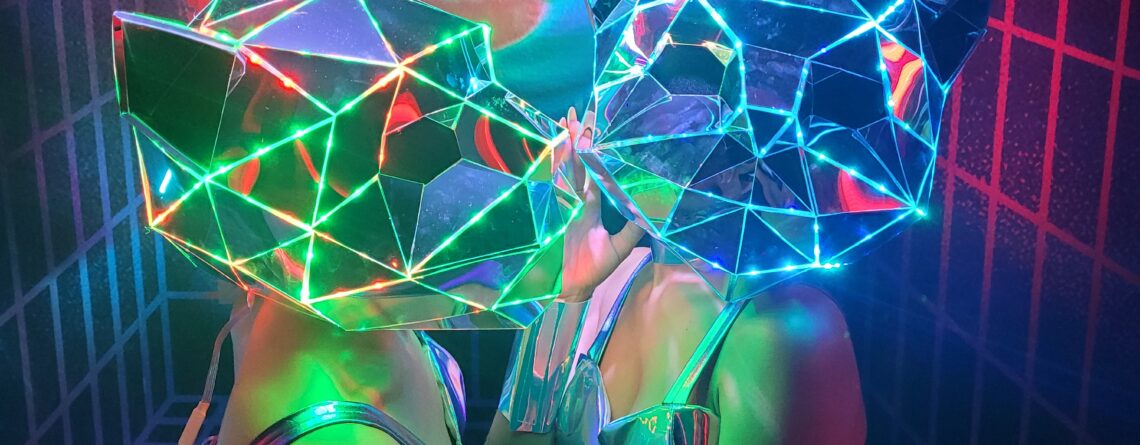
A decade ago, a great event performance came down to three things: choreography, costumes, and music. Today, there’s a fourth pillar. It’s light.
LED performances use dancers, costumes, and set pieces built around programmable, synchronized lighting. They’ve changed what audiences expect to see at concerts, weddings, product launches, and parties. What started as a novelty act is now a core part of how modern events create scale, energy, and spectacle.
This shift isn’t just about looks, though. It’s technological. And it’s closely tied to how we experience and share events today, in a world where almost everything gets filmed. Below, we’ll look at how LED performances reshaped live entertainment, and why they’ve become one of the most requested elements at events in cities like Toronto.
Also read: https://starmuse.ca/what-are-led-femme-bot-dancers-and-why-are-they-trending-at-events/
From Static Costumes to Programmable Light
Traditional costuming works within fixed limits: fabric, color, texture, and movement. It’s a powerful toolkit. But it’s static. A red dress stays red, no matter the light, the room, or the moment in the show.
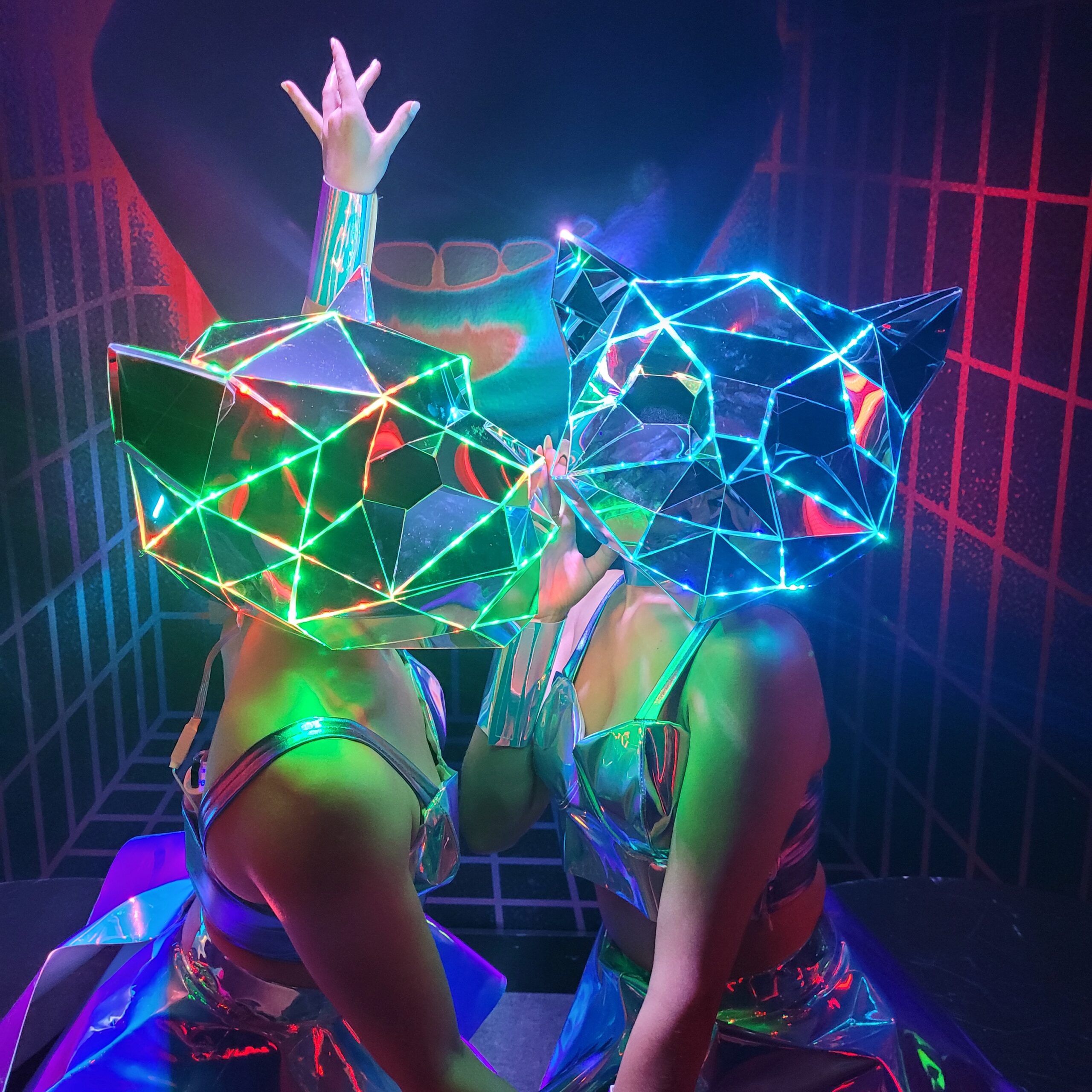
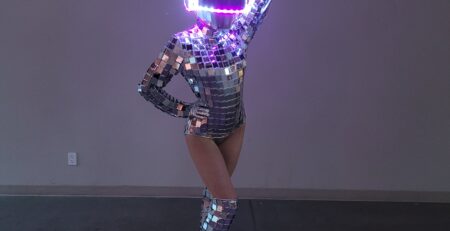
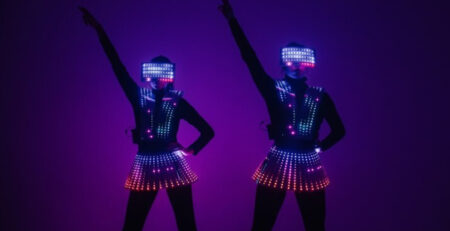
LED costuming breaks that rule completely. Modern LED performance wear uses programmable pixel strips, small controllers, and wireless triggers. These let color, pattern, and brightness change in real time, often synced frame-by-frame with the music. A costume can pulse with a bassline. It can shift from cool blue to fiery red in a single transition. It can ripple with light, so a dancer looks like they’re made of motion rather than fabric.
This didn’t happen overnight, either. It’s the result of years of progress: smaller LED hardware, longer battery life, and more reliable wireless control. Just as importantly, designers learned to treat lighting as a performance partner, not just a backdrop. The result is a costume that acts less like clothing and more like an instrument.
Lighting as Choreography, Not Just Illumination
Here’s the biggest shift LED performance brought to live events: light stopped just illuminating a performance. It became the performance.
In a traditional show, lighting supports the choreography. Spotlights follow dancers. Color washes set the mood. Blackouts punctuate transitions. In an LED performance, though, the lighting often carries just as much emotional weight as the movement itself. A synced LED routine can build tension purely through color shifts and faster patterns, no matter how simple the choreography is underneath it. So designers now choreograph light and movement together, as one language, instead of treating one as a support act for the other.
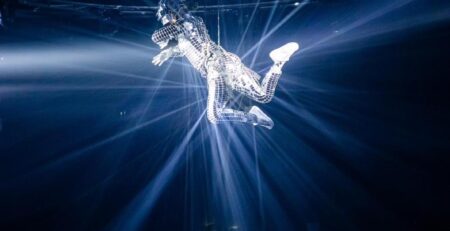
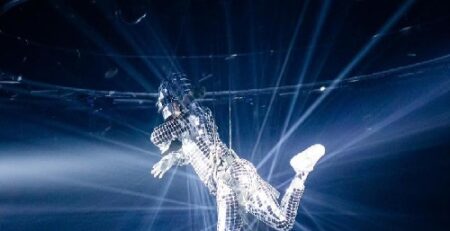
Laser elements often extend this even further. They add sharp beams, precise geometry, and atmospheric effects, like haze-cut light paths that give a room real cinematic depth. Together, LED and laser work can turn a hotel ballroom or a plain warehouse into something that feels closer to a concert stage than a private party.
Built for the Camera-First Era
You can’t talk about LED performance without talking about social media. Events today aren’t just experienced live. They’re filmed, clipped, and shared in real time, often before the performance has even ended. That reality has quietly changed what kind of entertainment gets booked in the first place.
LED performances are, almost by design, extremely camera-friendly. Bright, saturated light reads clearly on a phone screen, even in a dim room. Traditional costuming often struggles here. A glittery outfit might look stunning in person, for example, but wash out or blur in a low-light video. An LED costume tends to do the opposite. It often looks even better on camera, because the light source is the subject, not something the camera has to work to catch.
As a result, LED acts have become especially valuable wherever visibility and shareability matter: weddings, brand launches, milestone parties, and nightlife events where guests are already filming. A single well-timed LED entrance can generate more organic social content in three minutes than a whole evening of traditional entertainment. Why? Because it’s built to look good through a lens, not just to the naked eye.
Immersive Presentation Over Passive Viewing
LED performance also introduced a second big shift: a move away from passive viewing and toward full immersion. Traditional performances usually happen in front of an audience, with a stage and a clear viewing angle. LED and laser performances, on the other hand, increasingly happen around an audience.
LED costuming and laser rigs don’t need traditional stage lighting to be visible. That means performers can move straight through a crowd, weave between tables, or circle a dance floor, all while staying a clear visual focal point from any angle. So entertainment stops being something guests simply watch. Instead, it becomes something they’re surrounded by, more environment than show. Add fog, haze, or projection, and some LED performances turn the entire room into part of the experience, not just the performers on the floor.
This is a big reason LED acts have become popular transitional moments at events. They’re often the segment that shifts a room from dinner-and-conversation mode into full dance-floor mode. In fact, the lighting alone can signal that shift before a single beat of music changes.
Why This Matters for Event Planning Today
Toronto venues range from historic ballrooms to industrial-chic warehouses to outdoor rooftops. For anyone planning an event in a city like this, LED performance offers something traditional entertainment often can’t: full control over atmosphere, no matter what the room looks like. A venue with plain house lighting can be transformed in minutes by a well-designed LED or laser act, without changing the physical space at all.
That’s part of why entertainment companies now treat LED and laser work as a core offering, rather than a one-off novelty. At StarMuse Entertainment, for example, LED dancers and laser performers are built into the core lineup for exactly this reason. They punctuate key moments in an evening, create standout entrances, and anchor the part of a party where organizers want a guaranteed visual peak.
If you’re thinking about booking this kind of performance, here are a few things worth keeping in mind:
- Timing matters more than with traditional acts. LED and laser work is most effective once ambient lighting is lower. So these performances usually work best later in the night, not during a bright, fully-lit dinner hour.
- Room size and layout affect the impact. Laser elements especially benefit from open floor space and slightly higher ceilings, where beam paths and haze effects have room to read clearly.
- Sync quality is everything. The gap between an average LED performance and a genuinely striking one usually comes down to how tightly the lighting syncs with the music. That’s a technical skill as much as a creative one, so experience matters when you’re booking.
- Think about the whole guest experience, not just the stage. These performances read well from multiple angles. So they’re often more effective moving through the crowd or across an open floor, instead of staying confined to a traditional front-facing stage.
The New Default, Not the Novelty
What started as an eye-catching gimmick has settled into something else: a new baseline expectation. Audiences who’ve seen LED and laser performances at concerts, festivals, and big-budget weddings now expect the same energy at smaller, more personal events, too, like a corporate holiday party, a milestone birthday, or a private celebration. The bar has moved. Light-based performance is a big reason why.
Event technology keeps evolving. LEDs keep getting smaller and brighter, wireless sync keeps getting more precise, and laser and projection systems keep integrating more seamlessly. So this visual language will keep expanding, too. But the core shift has already happened: light is no longer just a tool that helps audiences see a performance. It has become the performance itself. And it’s changing how events all over Toronto, and beyond, get designed, experienced, and remembered.



Leave a Reply