
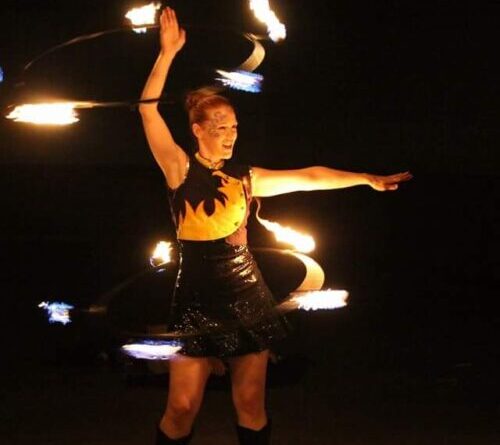
Every brand wants to be remembered. Most spend their budget chasing that goal through ads, banners, and email campaigns that guests forget by the time they reach the parking lot. But there is one marketing tool that consistently outperforms the rest at building lasting brand recall: live event entertainment. When a company invests in event entertainment in Toronto, it isn’t just decorating an evening — it’s shaping how thousands of guests will remember the brand behind it, for years after the lights come down.
This is the angle most marketing teams overlook. A logo on a step-and-repeat gets a glance. A live performer, a roaming photo moment, or a striking visual act gets a story people tell their coworkers on Monday morning. That story is the brand impression. And in a market as saturated with polished digital ads as Toronto’s, the brands that break through are increasingly the ones willing to invest in a moment guests can actually experience, rather than another moment they scroll past.
This article breaks down exactly why entertainment has such an outsized effect on brand perception, where it delivers the most value, and how companies can plan an activation that reflects well on the brand long after the event wraps.
How Live Experiences Rewire Brand Memory
Human memory is emotional before it is logical. We don’t remember the tagline on a banner; we remember how a moment made us feel. This is why corporate event entertainment has such an outsized effect on brand perception compared to static marketing. A dance performance, an LED display, or an aerial act triggers a genuine emotional response — surprise, delight, awe — and the brand hosting that moment gets permanently linked to the feeling.
Passive advertising asks an audience to absorb information. Live entertainment asks an audience to participate in an experience. Participation is what converts a fleeting impression into a durable memory, and a durable memory is what eventually turns into word-of-mouth, repeat attendance, and brand loyalty.
Marketers often describe this as the difference between “telling” and “showing.” A press release tells a client that a company is innovative. A room full of LED-lit performers, interactive photo moments, and flawless production shows them — without a single word of copy. Guests draw their own conclusions about a brand’s quality, creativity, and attention to detail based entirely on how the event around them feels. That inference happens instantly, and it sticks far longer than anything read off a slide.
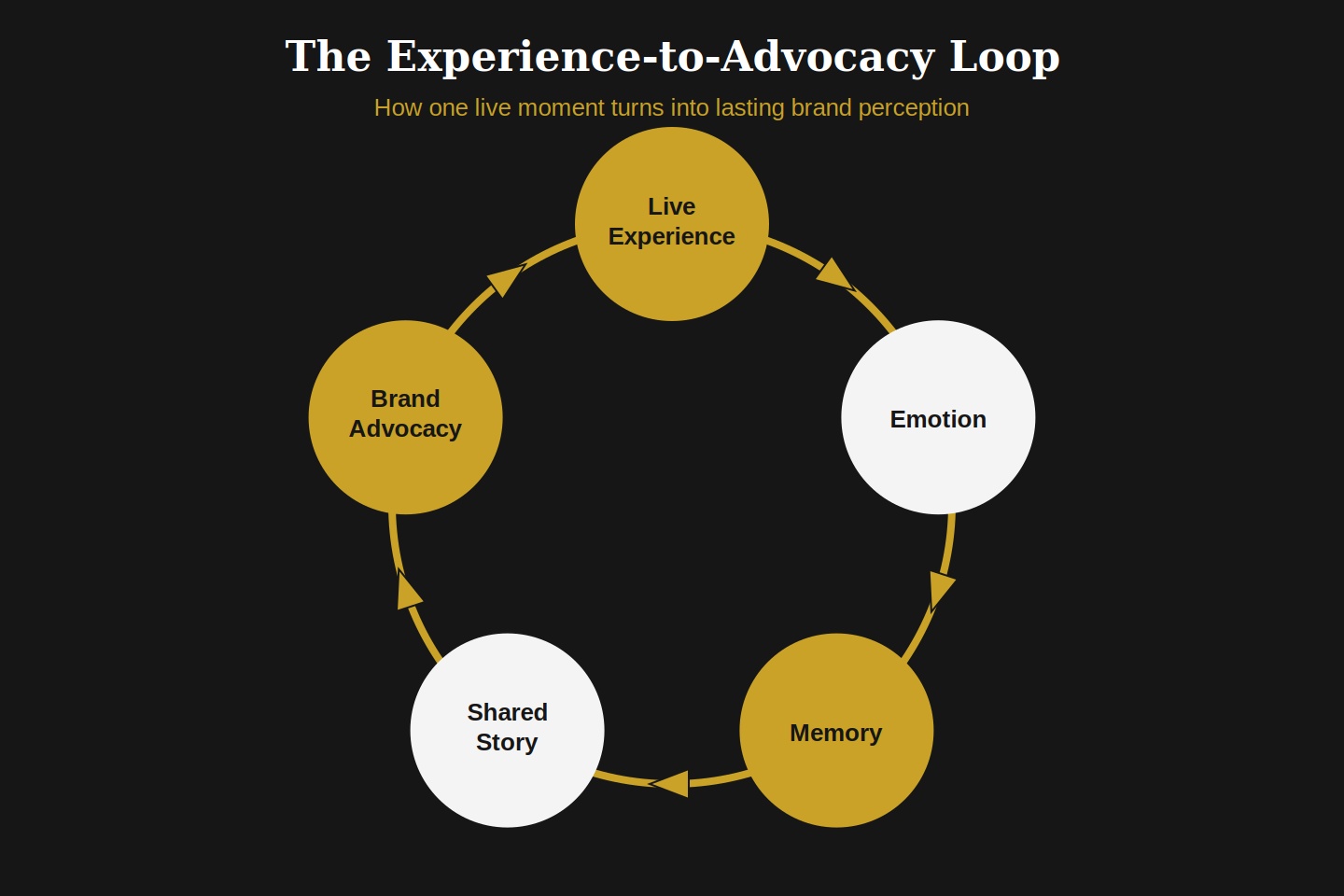
A circular diagram showing how a live brand experience moves through emotion, memory, and story to become brand advocacy, which feeds back into future experiences.
This loop is precisely what a well-produced brand activation is designed to trigger: an experience worth feeling, worth remembering, and worth repeating. It’s why companies increasingly treat entertainment booking not as an afterthought line item, but as a core piece of their experiential marketing strategy — budgeted and planned with the same intention as a product launch or an ad campaign.
Why “Just Another Corporate Party” Doesn’t Move the Needle
Generic entertainment produces generic perception. A brand that hires a DJ and calls it a day blends into every other launch party guests have already attended that quarter. Brand perception is built through distinctiveness — the acts, visuals, and moments that a competitor hasn’t already used.
This is where specialty, art-based performance separates a forgettable event from one that defines how a brand is remembered:
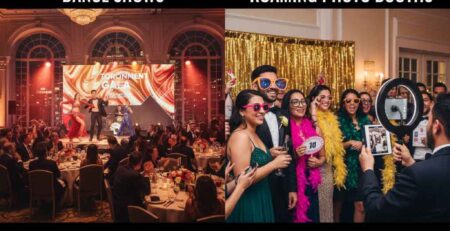
- Dance shows set the tone and energy of a room within seconds, giving a brand launch or gala the “wow” opening it needs.
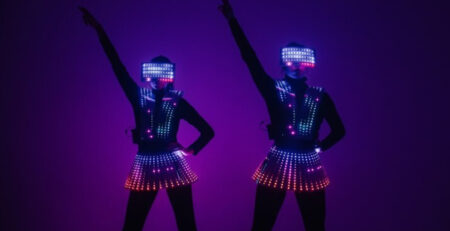
- LED dancers and lasers create a visually striking, highly photographable moment — exactly the kind of content that ends up on a guest’s Instagram story, extending brand reach for free.
- Roaming photo booth entertainment turns every guest into a participant rather than a spectator, generating shareable content stamped with the brand’s presence long after the event ends.
- Belly dancers, gogo dancers, and aerialists add a layer of spectacle that signals a brand invests in quality — a subtle but powerful cue about how that brand treats its clients and guests in every other area.
- Mirror costume performers and champagne skirt hosts give a brand a luxury visual identity that guests instantly associate with an elevated, premium experience.
- Circus acts and body painting artists add an unexpected, artistic layer that gives a brand permission to feel bold and creative rather than safe and predictable.
Each of these acts functions as a small piece of brand storytelling. Guests don’t need a slide deck to understand that a company is premium, creative, and detail-oriented — they feel it the moment a performance begins. The specific act matters less than the principle behind it: entertainment that a guest has genuinely never seen before is what gets photographed, discussed, and remembered as “that brand’s event,” rather than filed away as one more open bar and playlist.
The Business Case for Treating Entertainment as a Brand Investment
It’s easy to file entertainment under “nice to have” when budgets tighten. But framing it that way misses what a strong activation actually returns to a business. Live event entertainment influences brand perception across several measurable business outcomes, not just the warm feeling in the room that night.
Client retention and account growth. A client-appreciation event with genuinely memorable entertainment reinforces the relationship in a way a thank-you email never will. Account teams routinely report that clients bring up a standout performance months later, in the same breath as renewal conversations.
Talent attraction and retention. Internal company events — holiday parties, milestone celebrations, team offsites — shape how employees describe the company to friends, family, and prospective hires. A well-produced event signals that a company invests in its people the same way it invests in its clients.
Earned media and organic reach. Visually striking entertainment is inherently more shareable than a branded backdrop. LED performers, aerialists, and roaming photo experiences generate guest-created content that reaches far beyond the room, at zero additional media spend.
Sales and partnership conversations. At trade shows, product launches, and investor events, entertainment gives prospects a reason to linger at a booth or stay for the full presentation instead of moving on to a competitor’s table. More time in the room means more opportunity to make the business case.
Where Event Entertainment Shapes Brand Perception Most
Not every event needs the same type of entertainment, and matching the act to the occasion is part of what makes an activation feel intentional rather than bolted on. Here’s how the right entertainment choice tends to map to common event types in Toronto’s corporate calendar:
Product Launches
A launch is the first impression a product gets. LED performers, dramatic reveals, and choreographed dance openings build anticipation and give the moment a sense of occasion that a simple presentation can’t replicate on its own.
Corporate Galas and Award Nights
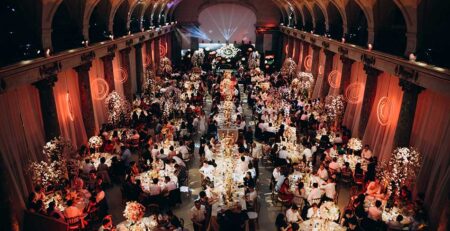
These events are built around recognition and prestige, which makes them a natural fit for elevated, visually rich acts like mirror costume performers, champagne skirt service, and aerial displays — entertainment that reinforces the sense that the evening, and the company behind it, is a big deal.
Trade Show and Conference Activations
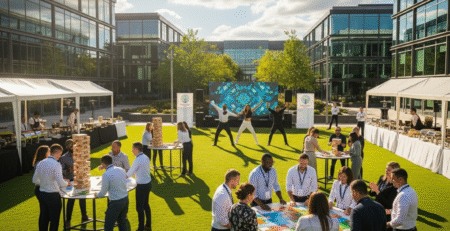
With dozens of competing booths fighting for the same foot traffic, roaming performers and interactive photo experiences are some of the only tools that reliably pull people in from the aisle and hold their attention long enough for a real conversation to happen.
Client Appreciation Events
These events succeed or fail based on how special guests feel. Personalized touches — a themed performance, a custom photo activation, or an intimate dance showcase — tell top clients they were considered individually, not processed as a mailing list.
Milestone Anniversaries and Grand Openings
Anniversaries and openings are inherently about legacy and arrival. Entertainment that matches the scale of the milestone — circus acts, large-format dance shows, or a striking themed concept — visually communicates that the achievement is worth celebrating properly.
Measuring Impact Without Guesswork: Depth Over Reach
Traditional advertising is optimized for reach: how many people saw the ad. Live event entertainment is optimized for depth: how strongly the brand impression sticks. The two aren’t competitors — they play different roles — but depth is consistently the harder outcome to buy, and the one that compounds over time through referrals and repeat bookings.
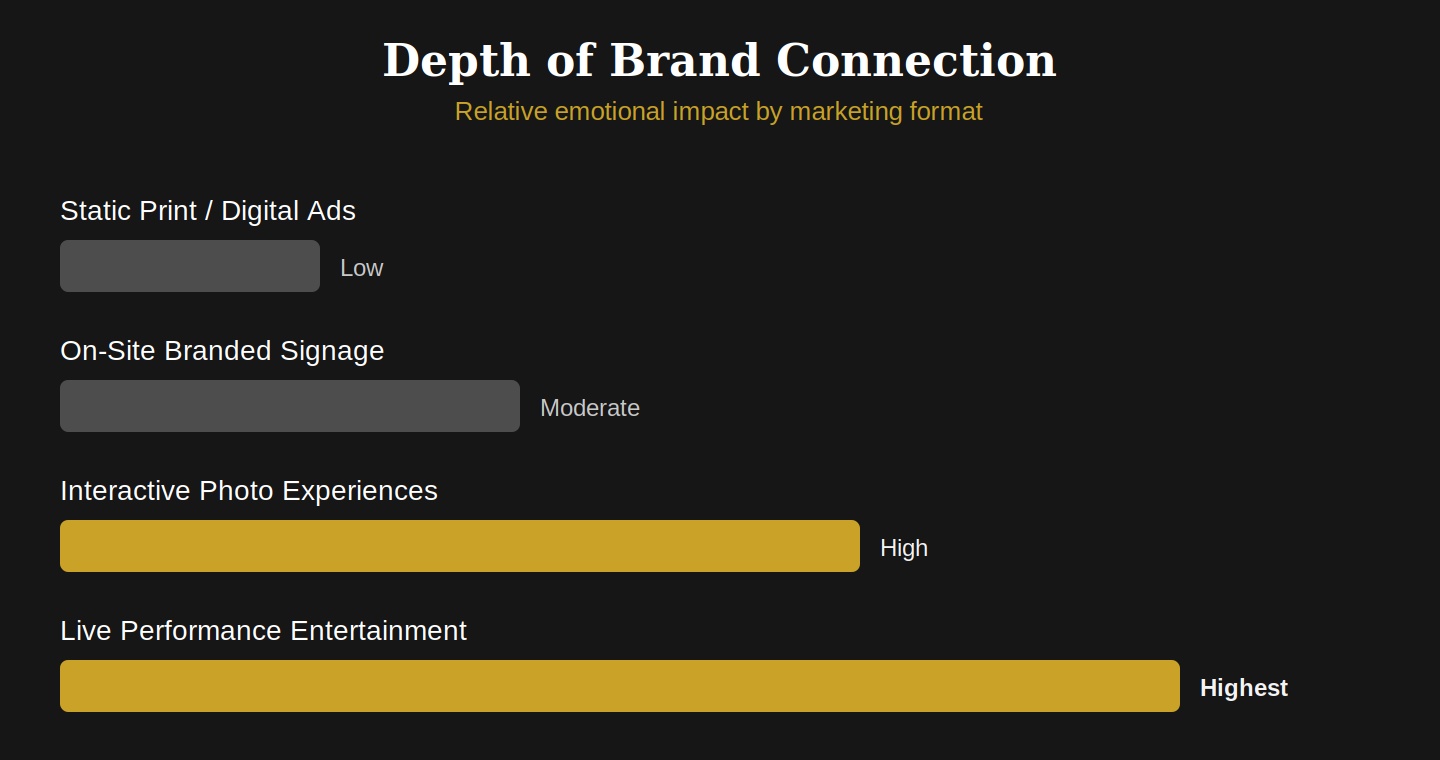
A horizontal bar diagram comparing the relative depth of brand connection created by static ads, digital banners, branded signage, and live event entertainment, with live entertainment shown as creating the deepest connection.
This is a directional illustration of a well-documented marketing principle, not a statistical claim — but the pattern holds up intuitively for anyone who has ever attended both a trade-show booth and a genuinely well-produced brand activation. One is forgotten by the next booth. The other is what people talk about on the drive home.
The Toronto Context: Why Local Expertise Changes the Outcome
Toronto’s corporate event calendar is dense — galas, launches, and client events compete for the same guest lists across the same handful of months. That density raises the bar for what counts as memorable. Guests who attend several branded events a season develop a sharp eye for which companies are recycling the same generic setup and which ones are actually investing in something new.
Working with a Toronto-based event entertainment company that understands local venues, vendor logistics, and audience expectations gives a brand a real advantage here. A team with a decade of experience in the city’s entertainment market knows which acts have already saturated the scene, which venues have space restrictions that affect staging, and how to build a concept that still feels fresh to a guest list that has seen a lot of parties.
Entertainment as an Extension of Event Management
None of this works without execution. A stunning performance concept falls flat if the logistics behind it — timing, staging, venue coordination, guest flow — aren’t handled with precision. That’s why brand perception is really shaped by two things working together: the creative concept and the operational delivery.
This is where full-service event management in Toronto becomes part of the brand story itself. When performers arrive on time, transitions are seamless, and the evening flows without a single awkward gap, guests register that polish as a reflection of the host brand’s own standards — even if they never consciously notice the choreography behind it. A single late entrance or a fumbled cue, on the other hand, is the kind of small friction that quietly undercuts an otherwise strong brand impression.
How to Choose the Right Entertainment Partner for Your Brand
Not every entertainment company will protect brand perception the way a company needs it to. A few questions help separate a partner who will elevate the brand from one who will simply fill time on the agenda:
- Do they ask about the brand before pitching acts? A strong partner starts with the company’s audience, tone, and goals — not a generic catalogue of performers.
- Can they show a track record with similar corporate clients? Experience with galas, launches, and trade shows specifically (not just weddings or nightclubs) matters for corporate credibility.
- Do they manage logistics, or just the performance? Costuming, timing, venue coordination, and contingency planning are what keep a concept from falling apart on the day.
- Is the concept exclusive or off-the-shelf? Acts that are heavily booked across every event in the city dilute the “never seen before” impact a brand is paying for.
- How do past clients describe working with them? Responsiveness and flexibility during planning are usually a strong predictor of how the night itself will run.
Common Mistakes That Undercut Brand Perception at Events
Even companies with a generous entertainment budget can end up with an event that does little for brand perception. The most common missteps are avoidable:
- Treating entertainment as background noise instead of a designed moment guests are meant to notice and engage with.
- Choosing acts that don’t match the brand’s positioning — a playful, high-energy performance at a serious investor event (or the reverse) creates dissonance instead of connection.
- Underestimating logistics, resulting in delayed performances, awkward transitions, or acts that don’t fit the venue’s space or sightlines.
- Skipping a planning conversation and booking whatever act happens to be available, rather than one that reflects the brand’s specific story.
- Forgetting the photo moment — entertainment that isn’t visually shareable loses most of its extended reach beyond the room.
Building a Brand Guests Remember on Purpose
Brand perception isn’t accidental. It’s the sum of every deliberate choice a company makes about how it shows up in front of the people who matter to it — clients, employees, partners, and prospects. Live entertainment is one of the few marketing investments that guests actively want to be part of, rather than something they tune out.
Companies that treat their next gala, product launch, or milestone celebration as a brand-perception opportunity — not just a logistics task — consistently walk away with something advertising can’t buy: a room full of people telling each other, unprompted, how good that night was.
Frequently Asked Questions
How far in advance should we book event entertainment for a corporate event?
For galas, launches, and larger activations, most companies begin planning entertainment six to twelve weeks out, especially if a custom concept, costuming, or a specific act needs to be reserved. Smaller or more flexible bookings can sometimes be arranged with shorter notice.
What’s the difference between hiring a DJ and booking live performance entertainment?
A DJ shapes the sound of a room. Live performers shape the story guests tell about the event afterward. Many corporate events use both — music for atmosphere, and performance entertainment for the standout, photographable moments that carry the brand impression forward.
Can entertainment be customized to match our brand’s colours or theme?
Yes. Costuming, choreography, and staging can typically be tailored to a brand’s palette, launch theme, or event concept so the entertainment feels designed for that specific brand rather than a generic add-on.
Is live entertainment only worth it for large-scale events?
No. Smaller, more intimate client dinners or team celebrations often benefit even more from a personalized touch, since the entertainment can be tailored closely to a smaller guest list and feel genuinely bespoke rather than mass-produced.
Plan Your Next Brand Experience with StarMuse
StarMuse Entertainment has spent more than a decade producing art-based, brand-defining entertainment for corporate events in Toronto — from dance performances and LED acts to fully managed event production. If your next event needs to do more than fill a room, and actually shape how your brand is remembered, get in touch with our team or explore our full event entertainment services to start planning.
Book Now to secure entertainment for your next corporate event, launch, or milestone celebration.




Leave a Reply