
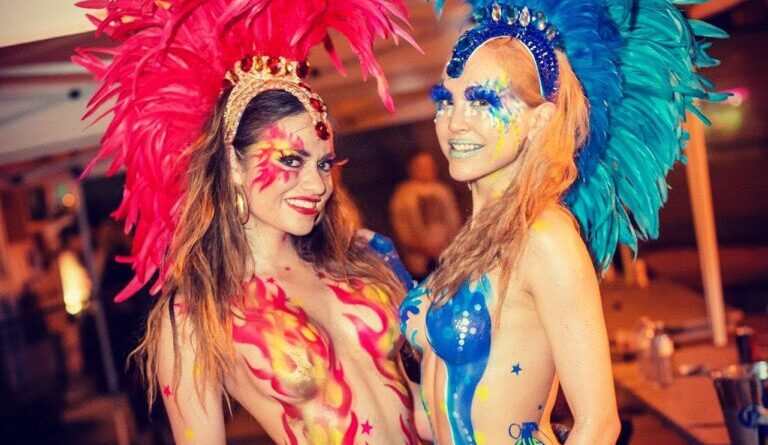
Most people watching a body paint performer glide through a Toronto gala or product launch assume the hard part happened somewhere off in the wings, a quick brush-up before showtime, nothing more. The reality is a lot more involved. A look that needs to hold up under stage lighting, close-up phone cameras, and hours of movement doesn’t happen in twenty minutes. It’s closer to a small production in itself, with its own timeline, its own failure points, and its own quiet craft that most guests never think to ask about.
Here’s what actually goes into getting a body paint look ready for a four-hour event, from the first sketch to the final touch-up before the lights come down.
It Starts Days Before Anyone Picks Up a Brush
The design work happens well before event day. A good artist wants to know the venue’s lighting setup, the colour palette of the room, whether the performer will be under warm spotlights or cool LED washes, and what the piece needs to communicate from thirty feet away versus up close in a photo. A design that reads beautifully under gold ambient lighting can go flat or muddy under blue stage light, so the palette gets tested against the actual lighting conditions whenever possible, not just chosen on a screen.
There’s also a skin test, always. Reputable artists patch-test any new paint on the performer’s skin at least 24 to 48 hours ahead of the event, checking for irritation before it becomes a problem in front of a room full of guests. This step gets skipped more often than it should, and it’s one of the first things worth asking about if you’re booking a body paint artist for your own event.
Application Day: The Part Nobody Sees
For a look that needs to survive four hours of movement, application alone can take anywhere from ninety minutes to well over three hours, depending on how detailed the design is. A simple, bold graphic pattern moves fast. Fine linework, shading, blending multiple colours, or anything with metallic or UV-reactive elements takes considerably longer, since those products behave differently on skin than standard paint and need more careful layering to avoid cracking or patchiness.
The process usually starts with skin prep: cleansing, sometimes a light barrier product to help the paint adhere evenly and protect the skin underneath. From there, the artist typically blocks in large shapes first, working from the base layer outward, before adding detail work, shading, and any highlight or metallic accents last. It’s not unlike painting a canvas, except the canvas breathes, sweats, and needs to be comfortable enough to move naturally for hours afterward.
Choosing the Right Product for a Long Night
Not all body paint is built for a four-hour shift. Professional-grade paints used for events are typically alcohol-activated or specially formulated for durability and are chosen specifically because they set to a flexible, smudge-resistant finish rather than staying tacky or transferring onto clothing, furniture, or other guests. This matters enormously for anything involving close contact with an audience, handshakes, photos, or a walk through a crowded room.
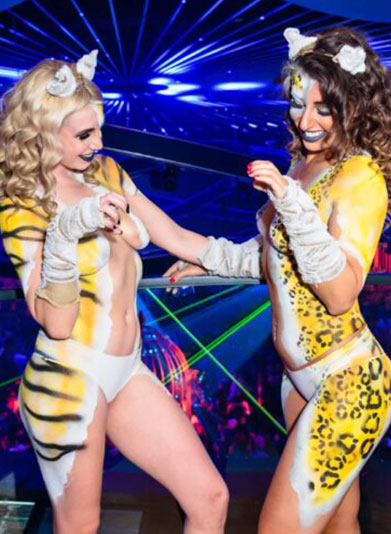 Setting the paint properly is its own step. A finishing spray locks the design in place and helps it resist sweat and friction, but it needs time to cure, usually a window built into the schedule before the performer ever steps into the room. Rushing this step is one of the most common reasons a look starts looking tired halfway through the night.
Built to Move, Not Just Built to Look Good Standing Still
A design that looks stunning in a static photo can fall apart the moment a performer starts moving through choreography, gestures, or simply mingling with a crowd. Experienced artists design with movement in mind from the start, thinking about which areas flex the most, like joints, and using techniques that account for stretching and creasing rather than treating the body as a flat surface.
This is also where the performer’s own comfort matters more than people realize. A design that pulls or cracks at the elbow every time an arm bends isn’t just a cosmetic problem, it becomes a genuine distraction for the performer trying to focus on the room. Good collaboration between artist and performer during the design phase heads this off long before event night.
The Mid-Event Reality: Touch-Ups and Damage Control
Even the best application starts to show wear over a long night. Sweat, contact with clothing or props, and simple friction from movement all take a toll, which is why most professional body paint bookings for multi-hour events include a touch-up kit and, ideally, a short window built into the evening for the performer to step away and get refreshed. Common trouble spots are predictable: hairlines, joints, and any area that gets repeated contact, like hands during a meet-and-greet portion of an event.
Planners booking a body paint performer for anything longer than an hour or two should ask directly whether touch-ups are built into the package, and whether the artist stays on-site or is reachable if something needs fixing mid-event. It’s a small logistical detail that makes a real difference in how the look holds up in photos taken at hour three versus hour one.
Taking It Off Is Its Own Process, Too
The end of the night isn’t as simple as a quick shower. Professional-grade paints are designed to be durable specifically so they don’t come off with ordinary contact, which means removal takes real product and real time, often a dedicated remover or oil-based cleanser followed by a proper cleanse to make sure nothing irritating is left sitting on the skin overnight. A rushed or incomplete removal is one of the more common causes of post-event skin irritation, so this step is treated with just as much care as the application itself.
What This Means If You’re Booking One for Your Event
Understanding everything that goes into a body paint look isn’t just interesting trivia, it’s useful when you’re planning your own event. It explains why a professional booking needs real lead time for design and testing, why the artist needs access to the performer well before doors open, and why a proper touch-up plan matters if your event runs longer than an hour or two. A look that took three hours to build deserves the extra fifteen minutes it needs to stay flawless through the whole night, not just for the first round of photos.
Also read: What to Expect When Hiring a Body Painter for Events in Toronto
Leave a Reply