
A DJ provides continuous music and is the more affordable, flexible choice for keeping a dance floor moving throughout an event. A dance show delivers a structured, visually striking performance that creates a standout moment guests remember and talk about. Most well-planned events in Toronto do not actually choose one over the other — they use a DJ as the foundation for the evening’s music and bring in a dance show as a headline moment within it. Whether you need one, the other, or both depends on your venue, budget, audience, and what you want guests to remember about the event.
If you are planning a corporate gala, wedding reception, or private celebration in Toronto and weighing up where to put your entertainment budget, this guide breaks down exactly what each option delivers — and how to decide what is right for your event.
What a DJ Brings to an Event
A DJ’s core function is continuity. A skilled DJ provides a steady soundtrack across the full duration of an event — from background music during cocktail hour, to dinner-appropriate volume and tempo, through to a packed dance floor later in the night. The transitions between these phases are seamless, and a good DJ reads the room in real time, adjusting tempo, genre, and energy based on how guests are responding.
For Toronto events specifically, DJs are widely available, with hundreds of professionals working across the city covering corporate functions, weddings, and private parties. Pricing is generally more accessible than other entertainment formats, with event DJ bookings in the GTA commonly starting in the low hundreds of dollars and scaling up based on hours, equipment, and lighting packages.
The strengths of a DJ are flexibility and cost-efficiency. A DJ can pivot instantly between musical eras and genres to suit a diverse guest list, take live requests, and extend or compress their set without the logistical complexity that comes with live performers. For events where the music itself needs to flex constantly — a multicultural wedding reception with guests spanning several generations and musical tastes, for example — this adaptability is genuinely valuable.
The limitation is also tied to that flexibility. A DJ operates from behind equipment, and while a great DJ engages the crowd vocally and through music selection, the format does not offer guests anything to watch. The entertainment is entirely auditory. For events where a planner wants a specific visual moment — something guests will photograph, something that becomes the story people tell about the night — a DJ alone does not deliver that.
What a Dance Show Brings to an Event
A dance show is a structured, choreographed performance — typically 10 to 20 minutes in length — delivered as a headline entertainment moment within an event’s timeline. Unlike a DJ, which runs continuously, a dance show is a defined experience with a clear beginning and end, built around a specific theme, music selection, and visual concept.
The appeal of a dance show is rooted in something measurable. Research into audience response at live performances has found that watching a dance performance live and in person produces a stronger emotional and physiological response than watching the same performance on a screen. And that audiences who watch live performances together actually show measurable synchronisation in brain activity — a level of shared engagement that recorded or passive entertainment formats do not replicate. In practical terms, this is why a live dance performance creates the kind of “everyone stopped and watched” moment that becomes the highlight of an event recap, while background music — however well chosen — rarely does.
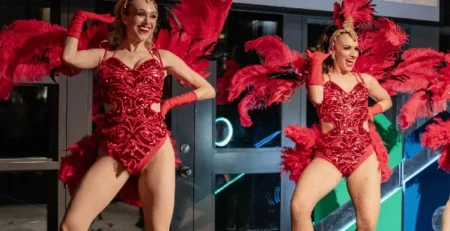
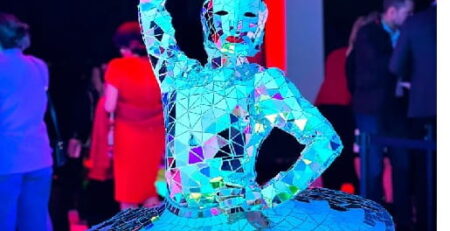
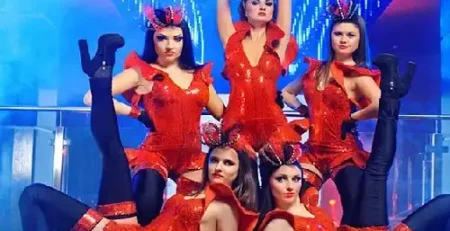
Dance shows also offer something a DJ cannot: thematic storytelling. A Las Vegas showgirl production, a Great Gatsby-era jazz routine, a custom-choreographed piece built around a company’s anniversary or a couple’s relationship story — these formats turn entertainment into narrative. For corporate events with a specific brand concept or theme, or for weddings and private celebrations built around a particular aesthetic, a dance show can be designed to reflect that concept directly, in a way that a DJ’s playlist cannot.
The trade-off is that a dance show is a defined moment, not a continuous presence. It requires a stage or performance area, coordination with the event’s lighting and sound setup, and a specific slot in the timeline. It is not designed to run all night — it is designed to be the moment everyone remembers from the night.
Cost Comparison: What to Expect in Toronto
Pricing varies considerably based on scope, but the general pattern across the Toronto market is consistent. A standard event DJ package — covering several hours with basic sound and lighting — typically falls in a more accessible price range than a professional choreographed dance show, which involves costume design, rehearsal time, and often multiple performers.
This does not mean a dance show is only for larger budgets. Many Toronto entertainment companies, including StarMuse, offer dance shows as standalone bookings of 10 to 20 minutes, which can be added to an event that already has a DJ providing the rest of the evening’s music. This combination — DJ for continuity, dance show for the standout moment — is one of the most common and cost-effective approaches used by experienced event planners in the city.
Which Works Better for Different Event Types?
Corporate Galas and Award Nights
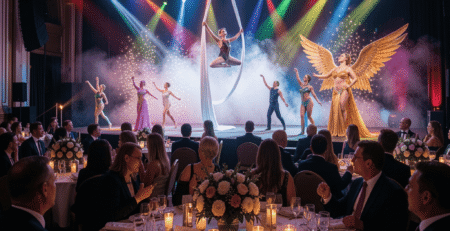
For formal corporate events, a DJ typically handles the evening’s overall music programming — background music during networking, dinner music, and dance floor music later on. A dance show works as a headline act after the formal programme concludes, giving the evening a clear “moment” that elevates it beyond a standard dinner-and-speeches format. Many Toronto corporate event planners now treat the two as complementary rather than competing choices.
Product Launches and Brand Activations
Here, a dance show — particularly a themed or custom-choreographed format — tends to deliver more value relative to cost. The performance becomes part of the brand experience and generates the kind of visual content that gets shared after the event. A DJ supports the atmosphere around it, but the dance show is what guests will remember and post about.
Weddings
This is where the combination approach is most established. A DJ provides the reception’s music throughout the evening, while a short dance performance — a surprise choreographed piece, a themed showgirl entrance, or a culturally significant performance — is placed at a specific moment, often timed to coincide with the transition from dinner to dancing. Couples planning multicultural weddings across the GTA frequently use this format to honour different traditions within a single celebration.
Private Parties and Milestone Celebrations
For smaller private events, a DJ alone is often sufficient for the bulk of the evening. A dance show becomes valuable when the celebration has a specific theme — a Gatsby-themed birthday, a Vegas Night anniversary party — where a themed performance reinforces the concept of the night in a way background music cannot.
The Honest Answer: It Depends on What You Want Guests to Remember
If the goal of your event is to keep people on the dance floor for several hours with minimal coordination and at a lower cost, a DJ is the right foundation — and likely the only entertainment you need. DJs are reliable, flexible, and well-suited to events where music variety matters more than visual spectacle.
If the goal is to create a specific moment that defines the event — something guests talk about afterwards, photograph, and remember as the highlight of the night — a dance show delivers that in a way a DJ alone cannot, regardless of how skilled the DJ is.
For most mid-to-large events in Toronto, the most effective approach combines both: a DJ as the consistent thread running through the evening, and a dance show as the headline moment within it. This is not a compromise — it is how experienced event planners across the city typically structure entertainment budgets, because it covers both needs without requiring either format to do a job it was not designed for.
Booking Dance Entertainment in Toronto
StarMuse Entertainment has been providing professional dance entertainment for events across Toronto and the GTA since 2005, with a background rooted in some of the city’s most demanding live entertainment environments — including ongoing residencies at venues such as Rebel and Cabana Pool Bar. The team offers a full range of dance shows, from Las Vegas showgirl productions and Great Gatsby-themed performances to fully custom-choreographed pieces built around your event’s specific theme or brand.
If you are planning an event and trying to decide whether a dance show, a DJ, or a combination of both is right for your timeline and budget, get in touch with the StarMuse team. They can talk through your event details and help you put together an entertainment plan that fits.
Frequently Asked Questions
Can I have both a dance show and a DJ at my event?
Yes, and it is one of the most common approaches for events in Toronto. A DJ provides continuous music throughout the event, while a dance show is scheduled as a headline performance at a specific point — often after dinner or as the dance floor opens. The two formats work well together because they serve different purposes.
Is a dance show more expensive than a DJ?
Generally, yes, on a like-for-like hourly basis, because a dance show involves choreography, costuming, and often multiple performers. However, dance shows are typically booked as short, defined performances of 10 to 20 minutes rather than for the full event, which makes them more accessible than many people expect — especially when added alongside an existing DJ booking.
What type of event is a DJ best suited for?
A DJ is well suited to any event where continuous music and flexibility are priorities — particularly events with a diverse guest list spanning different musical tastes and generations, such as multicultural weddings, or events where the budget needs to prioritise music over visual entertainment.
What type of event is a dance show best suited for?
A dance show works best for events where a specific theme, brand concept, or memorable moment is a priority — corporate galas, product launches, themed parties, and weddings where a couple wants a standout performance moment during the reception.
Does live dance entertainment actually make an event more memorable?
Research into audience engagement at live performances supports this. Studies have found that live dance performances produce stronger emotional and physiological responses in audiences than recorded performances, and that audiences watching live performances together show measurable synchronisation in engagement — an effect that contributes to why live performance moments are disproportionately what guests remember and discuss after an event.


Leave a Reply